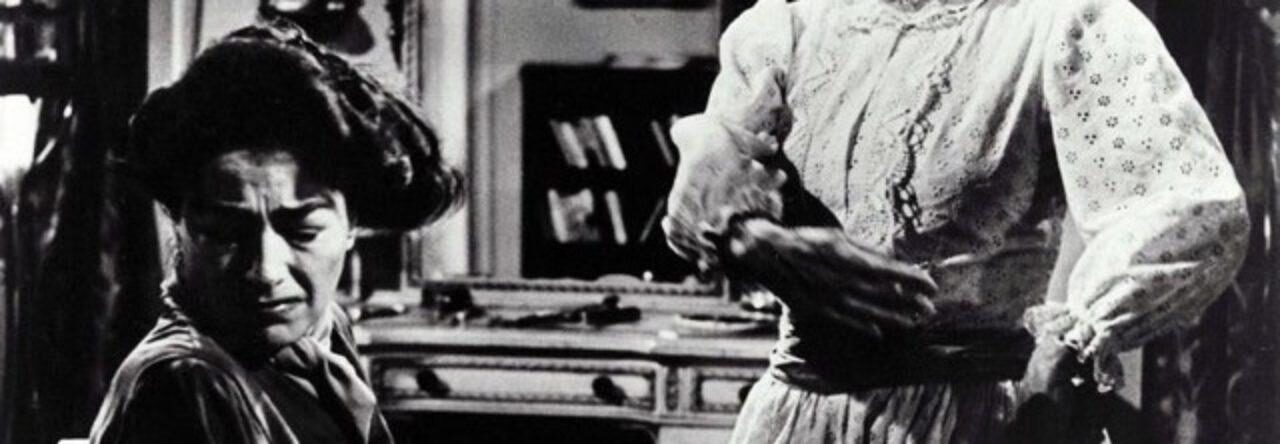
“I’m thinking new window treatments for the Lincoln Bedroom.”
Asked who he’d “boff, marry or kill” between Hillary Clinton, John McCain and Barack Obama, Alec Baldwin (the talented Baldwin, the one nine out of ten dentists recommend) answered that he’d sleep with Hillary and wed the senator from Illinois. Baldwin told The Observer:
“Barack would just be my long-term companion, as they say. I’d have to have sex with a woman because I’m not gay. I wouldn’t want to have sex with Barack Obama or McCain. Obama’s wife perhaps. Anybody’s wife — Bush’s wife, McCain’s wife, but no men — not even operating the video camera.”
Alec baldwin
As for McCain, Baldwin isn’t willing to kill him off:
“Maybe I’d lead him out into the woods and leave him there, and I’d come back and tell you that I’d killed him. But I’d lie, I wouldn’t really kill him. And knowing McCain, knowing his past in Vietnam, he’d make it back, he’d survive.”
alec baldwin
You know, as much as I like Michelle Obama (and I’ve kind of loved her since reading this New Yorker profile back in March) I’m intrigued by the idea of Baldwin as First Spouse. I imagine him promoting literacy to schoolchildren à la Laura Bush, but instead of sitting there all glassy-eyed and quiet he’d pound on desks and say things like, “We’re adding a little something to this month’s reading contest. As you all know, first prize is a Cadillac Eldorado. Second prize is a set of steak knives. Third prize is you’re fired.” It would really inspire children to pick up books, I think. Kids love bland, boxy luxury vehicles and free cutlery.
Bass originally approached People about coming out as Anne Murray.
In a vlog entry posted on his website yesterday, gossip guru Perez Hilton made some observations about the way the media treats the practice of outing queer celebrities that I thought bore repeating. If you want to watch the video yourself, the topic comes up around the 1:52 mark. If you’d rather read his remarks, I’ve transcribed them below:
The last thing I wanted to talk about today was something that I’ve really been thinking about recently. You know, a couple years ago I got so much crap, and I still get so much crap from people and the media for quote-unquote ‘outing’ celebrities.
Two years ago, I reported about Lance Bass’s secret relationship with his then-boyfriend, douchebag Reichen. I reported on the trips they would take together, I reported on the dates they would go on, I reported on the fights they would get into. All of this before Lance Bass officially came out of the closet — and helped his career by coming out, because he had no career before he came out.
Anywho, I got criticized so much for that, for reporting what I knew to be true. Well, I find it really interesting that the same thing is happening now, only it’s the mainstream media doing the outing. The mainstream media nowadays is reporting about Samantha Ronson’s alleged, reported lesbian relationship with Lindsay Lohan. And no one is calling them out on the outing. They’re not even using the word outing, they’re using the word reporting.
I don’t know if that makes me upset or it makes me happy, because I think actually it makes me happy that they’re treating them the same, and it’s to me a sign of equality. But also maybe it’s not.
Maybe it’s a sign of inequality. Maybe gay men and lesbians or bisexual women or Lindsay Lohan is held to different standards. Maybe it’s okay for Lindsay to be experimenting but for a guy, it could potentially be damaging to his career.
Like everybody still freaks out when I say Wentworth Miller is gay. Well, Wentworth Miller, star of Prison Break, is a homosexual. Yes, Wentworth Miller likes to suck cock. And there’s nothing wrong with that. Lindsay Lohan reportedly loves to eat pussy, and there’s nothing wrong with that, either.
What’s so interesting is even a ‘safe’ media outlet like People magazine who loves to play it safe reported in their most recent issue that Samantha Ronson and Lindsay Lohan are, quote, ‘definitely together.’ People magazine is saying that Lindsay and Samantha are ‘definitely together.’
It doesn’t take a rocket scientist to figure out that ‘definitely together’ means they’re in a relationship, they’re dating. People magazine outed Lindsay Lohan. How come nobody is calling them out on it? I don’t know. Or should they, should they not? Is the fact that no one is calling them out on it a good thing? I don’t know.
I’m not going to write a treatise on the ethics of outing, or what constitutes an outing, or anything like that. For one thing, I need to conserve my energy since I have a long day of tennis-viewing ahead of me. (It really wears you out watching other people run around like that.) For another, I’m lazy even when not in energy conservation mode. But I will suggest that celebrities like Bass and Lohan effectively out themselves when they don’t attempt to hide their same-sex relationships, which is why I take exception to the argument favored by Hilton’s critics that his so-called outing campaigns are tantamount to some kind of a gay witch hunt.
And to briefly touch on Hilton’s question of whether there’s a gender-driven double standard at work in how the media goes about outing celebrities, I think he’s right to a certain (possibly large) extent. However, it’s reductive to simply call it a discomfort-with-male-sexuality issue. In reality, there are all kinds of gender politics at work, from the way society has a tendency to be utterly dismissive of lesbianism and female bisexuality to the way celebrity-obsessed magazines and tabloid TV shows so aggressively exploit women in general and young women like Lohan in particular.
Jena Malone, a talented actress whose career Evan Rachel Wood seems to have stolen (or maybe not: would Malone have agreed to star in something as crappy as The Life Before Her Eyes?), has always been candid about having been raised in a Heather Has Two Mommies arrangement. Still, it was nice to read this in her new interview with The Independent:
“I was raised by two mums who were lovers. When I was younger it wasn’t anything that was abnormal. I had two mums and for me that was really exciting because when I was younger most people seemed to like their mum more than their dad so I’d be like, ‘Ha, I’ve got two of them!’ And I feel I got a lot of love, respect and acceptance from them. I had a really healthy normal relationship with my parents.”
Malone also tells reporter Lesley O’Toole that she takes pictures of her mothers, her sister and her father with her when she travels. It is unclear whether she packs photos of Mandy Moore’s breasts as well.
No, I’m not talking about the time he spent with Anne Heche. I’m talking about his romantic weekend getaway with David Letterman. I’d forgotten all about this video Martin crafted for The Late Show until last night, when I stumbled across it on YouTube.
This is why I love Steve Martin. Well, this and Pennies from Heaven. And his end credits dance with Lily Tomlin in All of Me. And also for the scene in The Man with Two Brains where he tussles with Kathleen Turner and she gasps, “My balls!” (Why didn’t Preston Sturges have Barbara Stanwyck do that?) No one but Martin could get the curmudgeonly Letterman to act as goofy as this.
Janet McTeer and Geraldine Somerville in a scene from Daphne
Last year, when the BBC announced plans to mark the centenary of Daphne du Maurier’s birth by unveiling a new telefilm about her life, the dorkier among us grew excited. The film would take its basis from Margaret Forster’s authorized biography of the writer, which meant du Maurier’s bisexuality wouldn’t be glossed over. In fact, Forster’s revelations about du Maurier’s affair with the actress Gertrude Lawrence and her unrequited love for Ellen Doubleday would form the basis of the movie.
Could Daphne be the next Portrait of a Marriage, we wondered? It had been 17 years since that groundbreaking BBC miniseries about Vita Sackville-West’s turbulent affair with Violet Trefusis first aired, and it remained unsurpassed in both daring and quality. Word that Janet McTeer, who starred as Sackville-West in Portrait, would play Lawrence in Daphne only added to the anticipation. Last week, a year after it premiered in the UK, Daphne was released on DVD in the United States by BBC Warner. Was it worth the wait?
As it turns out, Daphne is no Portrait of a Marriage. It isn’t even Portrait of a Half-Baked Extramarital Affair. If you had to describe it as a portrait of anything, the word disappointment would come to mind. The problem isn’t the apparently non-existent budget (though you’ll notice how few sets are used and how rickety-looking and sparsely decorated they are), or even the uninspired direction by Clare Beavan. The problem is the screenplay (credited to Amy Jenkins), which is so structurally unsound that it’s a wonder the principal actors made it through entire scenes without being struck by falling debris.
Daphne is a mess from its choppy opening moments, which rather turgidly attempt to establish its heroine’s inner turmoil while setting the framework for the extended flashbacks that contain the bulk of the story. The year is 1952, and Daphne du Maurier (played by Geraldine Somerville, of Harry Potter and Cracker fame) is standing in the rain outside the sprawling Cornwall estate she shares with her husband Tommy and their children, waiting for the postman.
He delivers a letter that causes her obvious distress. As this unfolds, Tommy’s inside leafing through private photographs that show his wife in bed with a woman we’ll eventually recognize as Gertrude Lawrence. His expression is one of slight surprise, with a touch of, “Well, it could be worse. She could’ve put it on the Internet.”
In the first of many essentially pointless scenes, Daphne enters the room to announce “She’s dead,” before heading back outside, into the storm. She cries as she stands at the edge of a cliff, watching the waves crash below her. Curiously, she does this only long enough for the title of the film to appear over the water. Then it’s off to her writing shack, where she starts to compose a lengthy letter, the contents of which she’ll share via voice-over for the next 90 minutes or so.
During this, she reminisces about a period of her life that started seven years earlier, when Tommy returned from the war. Their awkward, kiss-free reunion is cut short by news that Daphne is being sued for plagiarism in the United States. She heads for New York without Tommy, and along the way is greeted by Ellen Doubleday (Elizabeth McGovern), the wife of her American publisher, Nelson. (Who, I might add, is played by Christopher Malcolm, also known as Justin on Absolutely Fabulous. Sadly, Bo and Marshall don’t make an appearance.)
Daphne — who has a tendency to dress like she’s about to go fox hunting (though she only ever seems to brood and write), and who spends a great deal of the movie stomping around like a 12-year-old with mud on his boots — is immediately smitten with Ellen. These stirrings of attraction should ostensibly quicken a viewer’s pulse, but since Daphne’s lesbian leanings have already been broadly hinted at by her indifference to Tommy and a variety of silly lines in the script — newsreel footage of the bestselling author proclaims her a happy wife and “a keen archer too,” and poor Tommy practically apologizes for making it home alive with the unfortunate line “Darling, I hope it’s not a queer anti-climax for you” — it feels more perfunctory than anything else.
It doesn’t help that the heterosexual Ellen is rather shamelessly written as sexually ambiguous at first, the better to interest an increasingly bored audience. In the movie’s only genuine howler moment (it could have used a few more), the women bond over tea and crumpets at Ellen’s Long Island mansion, where Daphne boldly recounts the “kind of fatal attraction” she experienced with a teacher at her French finishing school. (“It gave the most extraordinary thrill.”)
As dangerous music swells, Ellen smiles through all the smoke she’s exhaling and, with a glance at Daphne’s crumpet, purrs, “Say, that butter is melting. Better suck your fingers.” How McGovern managed to keep a straight face during that scene I couldn’t tell you, but then she did manage to make it through the Steve Guttenberg epic The Bedroom Window without laughing hysterically.
Kissing your straight BFF rarely ends well.
The flirtatiousness between Daphne and Ellen only lasts for a scene or two, but Daphne is already hooked. Her plagiarism trial brings her suffering to the surface, and she returns from a long day on the stand to tell Ellen: “It’s so utterly degrading. It’s obscene. I have to answer questions… Don’t they understand that these things are private?” (You might want to keep a bottle of aspirin handy while watching Daphne. You’re hit over the head like that a lot.)
After prevailing in court, she meets Noel Coward at a celebratory soirée thrown by the Doubledays; Coward then introduces her to Gertrude Lawrence. (“She’s one of us,” he exclaims. By which he means British, wink-wink, nudge-nudge.) Janet McTeer’s presence — hers is one of those ‘supporting’ performances that supports the entire movie — does breathe some life into the proceedings, but Daphne will have to be rejected by Ellen a few more times before romance with anyone else becomes a possibility.
This impossible, never-ending crush on an unattainable woman is as tedious as it sounds, which is to say it’s incredibly tedious. By the time Daphne and Gertrude begin to develop a relationship while working on September Tide, a play inspired by du Maurier’s feelings for Ellen, you’re not quite sure what the wildly talented (and flamboyantly attired) Gertrude sees in her. More to the point, you don’t understand why Daphne continues to moon over Ellen. And moon she does, with overheated declarations taken directly from du Maurier’s letters to Doubleday. Letters that express sentiments like:
I was a boy of eighteen all over again. Nervous hands and a beating heart, incurably romantic and wanting to throw a cloak before his lady’s feet. I wanted to ride out and fight dragons for you.
There was an urgency to those letters, fraught as they were with naked anxiety, that is missing from Daphne. There’s no passion to any of it, nothing that gives you a sense of who these women were or why they were important to each other. Daphne du Maurier was a fascinating figure, as any newspaper article could tell you, but she’s a one-dimensional sad-sack here. And the character doesn’t just bore viewers, if Somerville’s somnolent performance is any indication.
She wakes up occasionally, especially opposite McTeer (and there’s a funny hotel room exchange with McGovern about Daphne’s sexual frustration, something about picking up a prostitute at the Ponte Vecchio), but mostly she’s handed the unenviable task of moping and moping some more. It takes a no-nonsense Gertrude to interrupt Daphne’s ongoing pity party, which she does by simply observing: “You’re being very ridiculous, you know. You’re behaving like a sulky schoolboy who needs his bottom spanked.” Now that would have been an interesting movie.
The new Weezer CD comes out today. I am sad about the cover, which is pictured above. I am slightly sad about the first single, “Pork and Beans.” (The buzzsaw guitars are cool, though.) This is all in addition to a profound lingering sadness over the travesty that was Make Believe, of course.
And yet, I can’t help myself. My love for The Blue Album, and especially Pinkerton, is so great, so all-consuming, that I will end up buying The Red Album. The deluxe edition, probably. If you want to line up to smack me or something, go ahead, but I know for a fact that several of you own Spice Girls CDs. Think about that before you pass judgment. And think about Rivers Cuomo moaning “If everyone’s a little queer / Why can’t she be a little straight?” in “Pink Triangle,” his song about a straight man’s unrequited crush on a lesbian. How can you not love him, even in that ridiculous cowboy hat?
Maria Sharapova has been ousted from the French Open by Dinara Safina. It wasn’t a surprising turn of events — Sharapova had struggled in all her previous matches, while Safina seems increasingly determined to prove she’s no Marat — but that doesn’t lessen my sadness over today’s results. Not only have I been robbed, cruelly robbed, of the chance to type this again at the end of the tournament, I’ve also been robbed of the chance to see Sharapova’s nifty Nike duds for the next week. At least Roger’s still around and looking dapper as ever.
In other news…
The New York Times ran an interesting piece today called “When Intolerance Becomes Intolerable.” Writer Marci Alboher profiles Lisa Sherman, a marketing VP who quit her job at Bell Atlantic fifteen years ago, after a diversity training seminar revealed her colleagues were a bunch of raging homophobes. Sherman’s exit from the company prompted chief executive Raymond W. Smith to take swift action in making Bell Atlantic a gay-friendlier corporation, and Sherman is now a bigwig at Logo, also known as the nonstop Bad Girls and Queer as Folk channel. Which is another way of saying that I wish Logo’s programming department would have some kind of diversity training seminar.
“We could teach those Zimbabweans a thing or two about lesbian parenting.”
A lesbian couple in Bulawayo, the second largest city in Zimbabwe, have announced they’re expecting a child conceived via artificial insemination. Zimbabwe, as you probably know, is not a particularly gay-friendly country; two years ago, their government passed legislation making it illegal for gay couples to hold hands or even hug. President Robert Mugabe, who chooses to believe that homosexuality doesn’t exist in the animal kingdom, has gone on record as saying that gays are “worse than dogs or pigs.” (Clearly he has never met my parents’ dog, who couldn’t be more bisexual if he were a character in Velvet Goldmine.)
Given Zimbabwe’s charming national history of institutionalized homophobia, this article condemning the happy couple shouldn’t come as any surprise, but I still found myself taken aback by the harsh language used by journalist Sithabisiwe Mathema, who refers to the pregnancy as an “uncanny and bizarre incident” perpetrated by the “seemingly conscienceless” lesbian couple, who traveled to South Africa for the procedure.
Mathema describes artificial insemination as a process “commonly used for animal breeding purposes,” neglecting to point out that it’s widely used by heterosexual humans as well, and strangely posits that it “stands to be seen” how a lesbian couple will be able to raise a child, nonsensically adding that, “like other children the baby will have to call one of them father and the other mother.”
As for the lengthy and completely bizarre comments offered by Aaron Ndlovu, who lives in the same flat as the expectant couple and apparently considers himself some kind of scientist (the kind who is completely fucking stupid), I’ll let you to discover those gems on your own and leave you with the words of Melissa Jacobs, the woman whose pregnancy inspired all this vitriol: “We are so enthralled about the birth of our son. We feel so proud even though people look at us disdainfully — they do not understand that even though we are ‘faggots’ as they call us, we also want to fulfill dreams of also raising a family to carry on our name.”
Krystal Freeman has written a remarkable essay called “Sakia Gunn: When Intolerance Breeds Murder,” that you need to read right now. Or five minutes from now, if that works better for you. Just read it. You know I’m serious when I post something that’s entirely free of goofy pictures and painfully unfunny one-liners.