Look what the homosexuals have done to me!

Author: Cranky Lesbian Page 23 of 54

Cranky Lesbian is a disgruntled homosexual with too much time on her hands. Click for film reviews or to follow on Instagram.
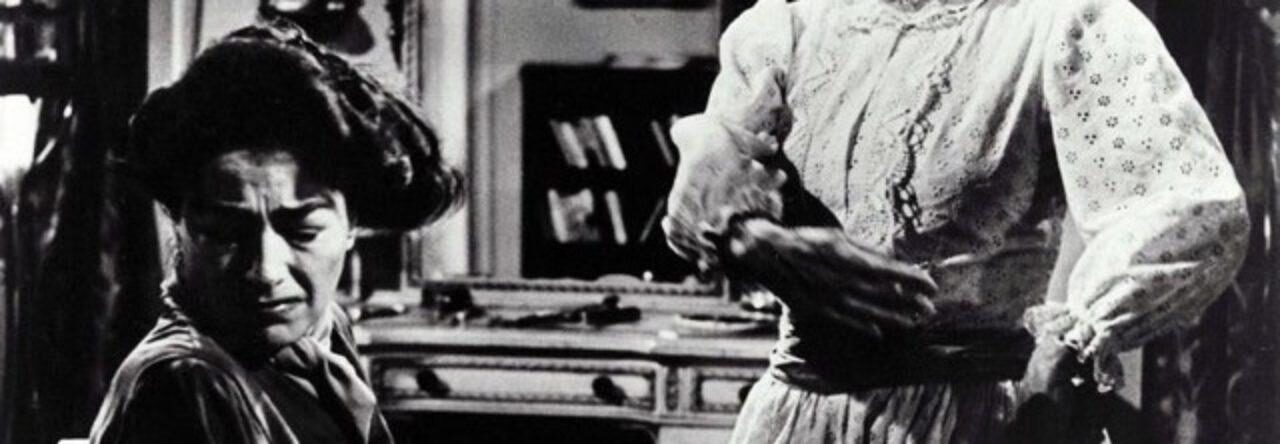
In No Place to Hide, Menaced by a Stalker Who Might Not Exist

Nothing’s quite as scary as the films you watched alone and late at night as a kid, even grainy reruns of old TV movies. That was my introduction to No Place to Hide, a 1981 CBS thriller starring Kathleen Beller (Dynasty‘s Kirby Anders). She plays Amy Manning, a mousy art student with a stalker, a man in a ski-mask and dark sunglasses. He finds her when she’s alone at night and opts for psychological torture over physical, telling her “Soon, Amy, soon.”

This October, nostalgic for something spooky, I decided to rewatch it and see if it held up. The search was more complicated than expected—it’s not currently available on subscription streaming services, DVD, or Blu-ray. It was last released on videocassette in 1989, by Video Treasures (later known as Anchor Bay). Fortunately, several retro YouTube channels currently offer it, one complete with original commercials.

Cranky in the Time of COVID

This spring, during lockdown, I was dropped off in an emergency room parking lot by my wife. It was pitch-black outside, cold, raining. Visitors weren’t permitted at the hospital, so she couldn’t join me. Cars weren’t allowed near the ER entrance. She later told me she had sobbed behind the wheel that night, watching me totter toward nurses huddled near a tent, worried I’d fall over. It wasn’t the first time she’d dragged me there and probably won’t be the last, but it was the only time she had to wait for phone calls to know what was happening.

The good news: I didn’t have COVID-19 and we never suspected I did. (We were, in all likelihood, repeatedly exposed to the virus earlier in the year. We’d each gotten sick then, with very different symptoms. By the time antibody testing was available to us, it was too late to be useful.) My complaint was severe abdominal pain and nausea, which we correctly assumed was related to my Crohn’s disease. My immune system’s been attacking my intestines for most of my life, which I’m fairly certain accounts for most of my baseline crankiness.

Betty Buckley Insults John Cornyn on Twitter

You never quite know what you’ll find when you glance at Twitter, whether it’s Elayne Boosler referring to SCOTUS as SCROTUS or octogenarian Ruth Buzzi repeatedly dining indoors at restaurants during a pandemic. There’s also Bebe Neuwirth’s frequent sharing of cat videos and George Wallace’s jokes about gonorrhea parades to entertain you.

Something I didn’t expect to encounter on a lazy Saturday afternoon was the legendary Betty Buckley, she of Carrie gym teacher, Eight Is Enough, and Tony Award-winning fame, attacking Senator John Cornyn (R-TX). In response to Cornyn’s tweet that “A 104-seat U.S. Senate is on the agenda if Democrats sweep the election,” the 73-year-old Buckley replied “You better fuckin’ believe it, you demented throw back!!”

Something’s (Maybe?) Happening Here

As you may have noticed, what it is ain’t exactly clear. I’m in the process of transferring the Cranky Lesbian archives from Blogger to another platform. There will be hiccups along the way but hopefully in the coming week those formatting issues (including redundant images) will be sorted out. I’ll also put up some bonus content that originally appeared elsewhere circa 2014. After that, who knows, maybe the occasional new movie-related post, seeing as there’s not much to do in a prolonged COVID-19 lockdown but revisit TV movies starring Judith Light and Elizabeth Montgomery.

Still Cranky After All These Years

It’s been a spell since my last post here and because I’m sometimes asked to confirm the following, let’s go ahead and do it: I’m still around, still cranky, still gay.

I appreciate that even now, readers encourage me to revive the blog, which for the past many years has been preserved as a (hopefully) mildly interesting time capsule of Internet life before everyone and their grandma identified as part of the LGBTQIA+ community. 

For the curiosity-seekers, yes, I still write, though I prefer to keep that work separate from this. And no, I will not hate-watch (or otherwise watch) the new L Word, which would have to work very hard to be even half as bad as the original. [2022 update: I’m reliably informed the new L Word was unwatchable, so kudos to the hacks behind it for managing to screw up such an easy assignment.]

Will I ever bring this particular blog back? I don’t know. The closest I’ve come was last year, during A Star is Born mania, when I had some very pressing thoughts on the 1976 remake and Kris Kristofferson in particular. But, like Jon Peters’ influence on Barbra’s career, the moment passed.

Holy God, the Blinding Stupidity

All that’s missing from this is a halting “such as” or two.

Debo Mitford, Connoisseur of Fine Poultry, Dead at 387

It’s no tortured Magda Olivero affair, but today’s New York Times obituary of Deborah Cavendish, the Duchess of Devonshire and the last of the Mitford sisters, offers this gem:

Being a Mitford, Deborah could hardly have been conventional. Diana married a fascist in the presence of Goebbels and Hitler. Jessica was a Communist and wrote witty books. Unity Valkyrie, in love with Hitler, shot herself when Britain declared war. Pamela as a child wanted to be a horse and married a fabled jockey. Nancy’s books satirized the upper classes. And Deborah, tentatively, became a connoisseur of fine poultry.

Robert d. mcfadden, New York Times

That’s a vast simplification of the Mitfords (see: The Sisters: The Saga of the Mitford Family and The Mitfords: Letters Between Six Sisters for mere patches of the much bigger picture), but doesn’t it beautifully capture what Tolstoy meant when he wrote, “Happy families are all alike; every unhappy family is unhappy in its own fascist-crazed, poultry-loving way.”

The Duchess of Devonshire gave many interesting interviews in recent years; you can find two here and here. Her enduring relationship with Diana, whose appalling politics caused Jessica (the greatest of all the Mitfords, if not a stellar mother) to cut ties with her and Nancy to inform on her to MI5, is one of the more eyebrow-raising threads of the epic Mitford saga.

Fun With Google Translate

“For I am nothing macho, missing more. I fashioned you can cross to see problems of sharing a locker room with a girl, but then to talk about sexism … If I want to pee in front of a girl? Not at all. That will be outdated in any case.”

baffling google translation of toni nadal

A bit of Google Translate-assisted wisdom from Toni Nadal, the perennially hat-wearing, leg-crossing, Y-chromosome possessing uncle and coach of Rafael Nadal, reacting to the appointment of Gala León, a uterus-having woman, as the captain of Spain’s male Davis Cup team.

You can read the original Spanish-language article here, whilst I imagine Uncle Toni feverishly reworking “O Captain! My Captain!” to something along these lines:

O Captain! My Captain! our fearful matches played;
The team has weather’d every foe, the prize we sought is won; 
The trophy is near, the bells I hear, the people all exulting, 
While follow eyes the steady keel, Rafa’s biceps grim and daring:

But O heart! heart! heart!
O the bleeding drops of red,
Where on the court my Captain lies,
She’s on her period.

Magda Olivero’s New York Times Obituary

Most of the Magda Olivero obituaries I’ve read so far are brief and say things like “The Italian soprano Magda Olivero, one of the most prominent interpreters of the Italian verismo operatic tradition whose career spanned 50 years, has died at 104” (via The Guardian) or “One of the great Italian divas, the soprano Magda Olivero, has died at the age of 104 in Milan after a career spanning more than 70 years” (via the BBC). The New York Times obit penned by Margalit Fox reads like a novel in comparison and has a slightly different tone:

Magda Olivero, an Italian soprano who for decades whipped audiences around the world into a frenzy of adulation that was operatic even by operatic standards — despite the fact that by her own ready admission she did not possess an especially lovely voice — died on Monday in Milan. She was 104.

margalit fox, new york times

The bolding is mine. What a way to kick off an obituary: “So-and-so, who was loved by fans around the world despite admitting she possessed only middling talent, died on this day at the age of 104.” Other highlights of the article, which mostly paints Olivero as a hack made famous by obsessed fans, include:

Writing in The Times in 1969, Peter G. Davis reviewed Miss Olivero in her most famous role, the title part in Francesco Cilea’s “Adriana Lecouvreur,” with the Connecticut Opera Association in Hartford.

“Her voice is not a beautiful one by conventional standards,” he said. “The tight vibrato, hollow chest tone and occasionally piercing upper register are qualities that one must adjust to.”

In spite of these limitations, or perhaps because of them, Miss Olivero distilled her voice and stage manner into a potent combination that many listeners found bewitching.

margalit fox, new york times

Again, my bolding. I can’t find the Davis review archived anywhere online to read the rest of it, but here’s what Opera News had to say about “Adriana Lecouvreur” in its Olivero obituary (Fox notes Cilèa’s fandom as well):

Francesco Cilèa, who considered Olivero the greatest interpreter of his Adriana, finally persuaded the soprano to return to the stage. Writing to her, Cilèa insisted it was Olivero’s duty “toward her public and her art.” The elderly composer was dying and wanted to hear Olivero as Adriana one last time. When she worked on the role with him, Cilèa declared Olivero had “gone beyond the notes” to what he felt when he created Adriana.

ira siff, opera news

Fox also covers conductor Ugo Tansini’s famous assessment of an audition Olivero performed in her youth: “She possesses neither voice, musicality nor personality. Nothing. Absolutely nothing! She should look for another profession,” which comes late but seems to haunt the entire obituary. There’s also this:

On April 3, 1975, Miss Olivero took the stage for her inaugural performance at the Met, 42 years after her debut in Turin.

“It wasn’t Magda Olivero’s evening,” Harold C. Schonberg wrote in The Times the next day, adding: “There are, naturally, all kinds of holes in the voice, and there also were occasional pitch troubles. Miss Olivero must necessarily represent the art of singing rather than singing itself.”

The crowd gave her a 20-minute ovation anyway.

margalit fox, new york times

Meanwhile, over at Opera News, Ira Siff (or should that be “simpering fanboy Ira Siff?” she asked with a raised eyebrow) writes of Olivero at the Met:

But it was not until 1975, at the instigation of her great admirer Marilyn Horne, that the Met finally invited Magda Olivero for three performances as Tosca. She made her debut soon after her sixty-fifth birthday. Although the audience was wildly demonstrative, this was no mere nostalgia event. After a few minutes to warm up and conquer nerves, Olivero’s voice was astonishingly fresh, shedding decades by Act II. At the second performance, this listener was treated to the most touching, spectacularly sung “Vissi d’arte” of his experience. During Act III, Olivero’s ascent to a spectacular, lengthy high C and plunge down two octaves into chest voice on the line “Io quella lama” earned her a spontaneous ovation. This old-school audience response was inspired by the artist’s old-school stage deportment; it was an evening that, in the best sense, turned back the clock whenever she was onstage.

ira siff, opera news

This is some Rashomon shit, is it not? You can mosey on over to YouTube and take a listen for yourself. I’m not an opera fanatic and possess no strong feelings about Olivero either way, but Fox is a master [archived here] of dramatic, entertaining (sometimes operatic) obituaries and this was no exception.

Let’s Watch a Documentary About Stephen Hawking

Having recently exhausted my “TV Icons in a Movie of the Week About Schizophrenia” and “Elderly Comedian Tells Jokes About Madonna’s Daughter Being a Hirsute Gay Man” Netflix viewing options, last night I turned to Hawking, a 2013 documentary by Stephen Finnigan in which Stephen Hawking tells the story of his own life.

There is no point in attempting to summarize it—Hawking covers everything so concisely that you might as well watch the zippy 85-minute production yourself—but there are three standout moments I wanted to recap that might get lost in the shuffle of other reviews.

Page 23 of 54

Powered by WordPress & Theme by Anders Norén