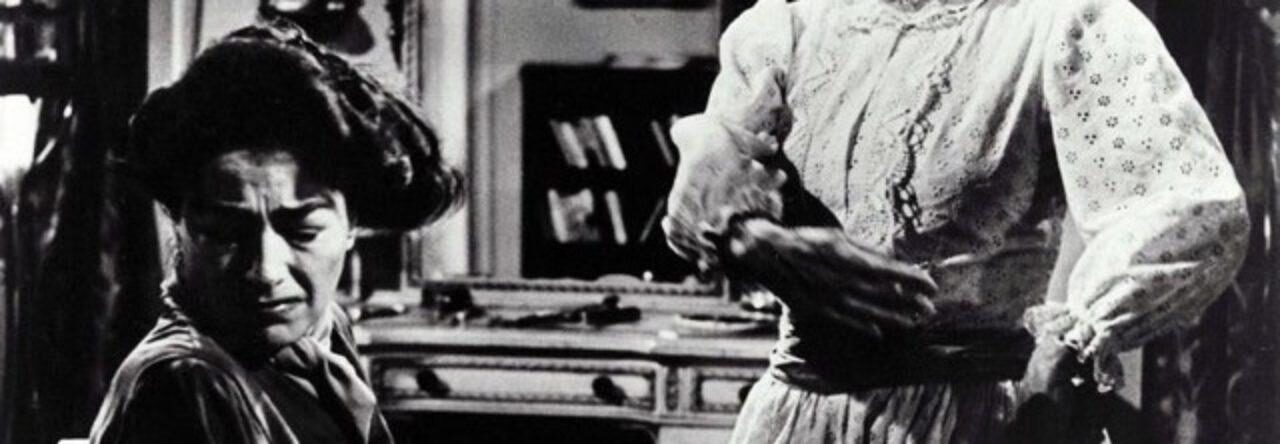
Leggings, sash, a pince-nez… Could Mayor McCheese be any gayer?
Are the Golden Arches a gateway to gay sex? Do Happy Meals now come with poppers and lube? These are the questions I ask myself each time I receive a new Google Alert about McDonald’s and its supposed promotion of the gay agenda.
Maybe if I followed the links to more of these articles, I wouldn’t have to wonder. But they mostly come from websites with names like ‘Stop the ACLU’ and have sleazy headlines that blare “McDonald’s Profits Help Fund Naked Homosex-Fest.” (Well, we know the money isn’t going toward clothes…)
While I’m the first to admit that I’m not the sharpest tool in the shed — just a few short years ago, I thought Tom Cruise and Nicole Kidman were a business arrangement for the ages — I’d recognize the stench of right-wing zealotry anywhere. (Where I grew up, it was a fragrant blend of sweat worked up during illicit rest stop restroom encounters and eau de KFC.)
My amazing powers of prescience tell me these articles are all about one thing: the latest American Family Association boycott of the fast food chain, prompted by a $20,000 donation to the National Gay and Lesbian Chamber of Commerce. I’m not opposed to reading crap, having amassed in my formative years an impressive library of Sweet Valley High books, but I can’t bring myself to read anything that takes the AFA seriously.
They’re money-grubbing hatemongers who’d boycott their own mothers for a bit of publicity and the best thing you can do is ignore them. Still, when I skimmed the latest alert to pollute my inbox, I was a little tempted to follow the link and post a comment. The headline, which read “McDonald’s Is Digging In Its Heels In Support of Homosexuality,” was too perfect a set-up. My fingers itched to reply, That McDonald’s wears heels was your first sign they “support homosexuality.”
The urge eventually passed, but I remain mildly curious about the content of the article. Does it define what constitutes support of homosexuality? Is there a “Vote Yes on Homosexuality” pin you can buy somewhere? If you make a donation to homosexuality, do you get a complimentary tote, or is that strictly a PBS thing? I don’t understand these people.
“Why didn’t we read the screenplay before we signed the contract?”
A hundred thousand years ago, when I was a half-closeted high school student, I went to the bookstore with my dad and saw a copy of Vito Russo’s The Celluloid Closet wedged on a shelf in the movie section.
The store didn’t have the greatest selection of books about movies: there were a lot of those short, fat video guides with entries that are only a sentence or two long; slender volumes that promised to help you become the next Quentin Tarantino or Robert Rodriguez (one written by Rodriguez himself); the obligatory Leonard Maltin and Roger Ebert collections, and that was about it.* I’d heard of The Celluloid Closet, mostly because of the documentary it inspired, and the book’s cover image of Louise Brooks and Alice Roberts dancing in Pandora’s Box called to me. I knew I had to read it.
It took a few months, but I finally acquired a copy off the Internet, and when it arrived I pored over it like a Talmudic scholar. Many of the movies Russo, an activist and film historian who died in 1990, savaged in the book weren’t available at my local video store. The ones he hated were the ones I wanted to see the most, just to know if they were really that bad.
The picture that accompanied a vitriolic description of a 1982 comedy called Partners was especially intriguing — it showed Ryan O’Neal and John Hurt bickering in the aisle of a grocery store. As far as images go, it was fairly benign. Could Partners really be that bad? Sure, O’Neal looked a bit ridiculous in his super-tight clothes, but there were countless stills in The Celluloid Closet that were more offensive: Ray Walston’s garish transvestite killer from Caprice, Michael Greer in The Gay Deceivers and a prison rape from Fortune and Men’s Eyes come to mind.
The text told a different story. Russo referred to the film as “insensitive to the point of slander” and drew quotes from a seemingly endless supply of negative reviews. (Rex Reed called it a “crime against humanity,” which he’d know a thing or two about following his involvement in Myra Breckinridge.) He was particularly fond of this assessment from Inquiry magazine critic Stephen Harvey:
“Picture this: A lot of Jews have been murdered and a gentile cop is teamed up with a Jewish cop who’s fixed his nose and changed his name and they go into this mysterious Jewish community and every Jew they find is pushy, foul-mouthed, vulgar, greasy, aggressive and a gold digger.”
When I read that Legend Films, in conjunction with Paramount, was set to release Partners on DVD last week, I couldn’t believe it. (The American DVD market is the damnedest thing: Only rarely can you find the Jacques Rivette or Shohei Imamura films you’re looking for, but a special anniversary edition of something like Hollywood Chainsaw Hookers is always just around the bend.) I’d managed to track down VHS copies of tripe ranging from By Design to A Different Story to the Gordon Willis freak show Windows, but I’d never nabbed a copy of Partners. It went straight to the top of my rental queue, and I finally watched it the other night.
Credited to La Cage aux Folles screenwriter Francis Veber, Partners had a sitcom-thin premise befitting its director, TV legend James Burrows (who, perhaps out of guilt, went on to direct all 194 episodes of Will & Grace). Hunky gay muscle models are being murdered in Los Angeles, and the police department dispatches two of their own, a womanizing sergeant (Ryan O’Neal) and a meek, closeted records clerk (John Hurt), to infiltrate the gay community in order to find the killer.
They’re given a purple Volkswagen Beetle and instructions to pose as a couple, an idea that repulses O’Neal but gradually appeals to Hurt, who enjoys his role as happy homemaker — he cooks, he cleans, he irons O’Neal’s underwear — even though his partner uses the word “faggot” so freely he makes Archie Bunker look like the executive director of GLAAD. O’Neal’s character is portrayed as a boor, but one we’re supposed to laugh at and root for.
Even after the obligatory scene of him experiencing homophobia at the hands of a fellow cop, he insults gay characters without giving it a second thought; it’s the kind of unfettered nastiness that strips the handful of scenes that feature O’Neal enjoying a life of quiet domesticity with Hurt of any charm they might have possessed. The Hurt character (or, as Russo put it, “John Hurt’s doe-eyed timid faggot”) is just as one-dimensional. Not only does he huff and brood when O’Neal’s girlfriends drop by, he’s depicted as too nelly to hold a gun without dropping it. Hurt does what he can to bring a measure of dignity to the role, but there’s no room for dignity in Partners.
After watching the film, I reread what Russo wrote about it more than 20 years ago. Back then, he called Partners, along with Making Love, Personal Best and Victor/Victoria,”too straight for gay audiences and much too gay for conservative straights.” I wonder if that would hold true today. If you remade Partners with Adam Sandler or Vince Vaughn in the O’Neal role, and Kevin James or Ben Stiller in Hurt’s, you might be looking at a $30 million opening weekend.
* There was also, if I might go completely off-topic for a moment, a single copy of Pauline Kael’s 5001 Nights at the Movies, a magisterially thick tome that listed for $35 and was out of my price range. Still, in my heart, that book belonged to me.
Each time we went shopping I’d check to see if it was still there, noting with disapproval every new spot of wear that appeared on its cover and spine, until one day it was gone and I rued the purchase of every $5 detective novel I bought that could’ve brought me that much closer to enjoying sentences like this favorite, from a review of Joseph Losey’s Mr. Klein:
“The title may sound like a Jewish detergent, but nothing gets washed away in this unsatisfying French quasi-thriller, set in Paris in 1942, during the Occupation.” Oh, Pauline. You were such a fucking idiot sometimes when you reviewed gay-themed movies, but you always made it up to us when you really hated, or truly loved, something.
All My Children‘s Erica Kane: “I love my dead gay son!”
… Upon hearing they’re finally getting a lesbian neighbor. A source at Granada (the TV production company, not the Andalusian province; they already have lesbians in Spain) has told the News of the World that writers of the popular British soap will introduce a lesbian character at some point in the (presumably near) future, explaining, “‘Corrie lags behind on issues of race and gender. Executives want to create a soap which is representative of society in 2008 and they are acutely aware they need more gay characters.”
Which: duh. Coronation Street has been on the air for approximately five hundred thousand years, and this will be its first lesbian character. To put this in some kind of historical context, lesbians have existed in England since at least 1965, when Mrs. Peel first appeared on The Avengers and the sight of Diana Rigg in a leather catsuit turned thousands of schoolgirls across the UK gay overnight.
That means Corrie writers have been ignoring us for decades, which is more than a little ludicrous when you consider that lesbians have been stealthily infiltrating seemingly ordinary streets in seemingly ordinary towns in Great Britain and the United States for many years now, ever since Elton John and Billie Jean King reorganized the Velvet Mafia and unveiled a newer, more aggressive gay agenda around the time “Philadelphia Freedom” hit the charts in 1975.
Anyway, here’s hoping the Coronation Street lesbian, whoever she ends up being, is treated with a little more respect than America’s token lesbian soap opera character, Bianca Montgomery of All My Children, has been shown. Bianca — and correct me if I’m wrong about this, because I’ll take a Douglas Sirk melodrama over a standard TV soap any day of the week — fell in love with a corporate spy; was raped by a family enemy (who later became her brother-in-law); became pregnant from the rape; had the baby in the middle of some kind of disaster and was told her baby died; eventually found out the baby was alive and had been switched at birth; and then annoyed viewers by falling for a transgender character whose name was Mork or Alf or Nerf or something unusual like that.
In between all of that, Bianca killed her rapist and lapsed into a coma for some reason or another. Eventually she woke up and headed off to Europe, the better to oversee the international goings-on of her family’s cosmetics empire. (You might call Bianca Montgomery the ultimate lipstick lesbian.) It all sounds pretty fucking moronic, doesn’t it? Yet I have to admit that back in 1999 or 2000, whenever it was that Bianca’s coming-out storyline was first announced, I tuned into All My Children just to see how they’d handle it.
It seemed like it took Bianca, who was a teenager at the time, months to come out, but once she did the hilarity factor went through the roof. Every conversation she had with her mother, the legendary Erica Kane, included a half-dozen mentions of Bianca’s sexuality. The words “gay” and “lesbian” always came after long, dramatic soap opera pauses, so a scene might play out like this:
Erica: I, I don’t want to talk about … this.
Bianca: What, Mom? What don’t you want to talk about what? That I’m … gay?
Then there would be a commercial break, after which the action would continue:
Erica: I don’t know what you’re talking about. This has nothing to do with your being… Your being…
Bianca: What, Mom? Why can’t you just say it? Gay. My being gay.
Then there’d be another commercial break, before the conversation would resume with more of the same:
Erica: Oh, that word. That word —
Bianca: What word, Mom? Gay?
It was hilarious. Cheesy soap music would play in the background and Susan Lucci would do a “Love Me, Emmy Voters!” flinch every time she heard the words “gay” or “lesbian.” One or both characters were often on the verge of tears during these heated exchanges, and then ABC would cut to laundry detergent commercials with happy-bouncy music and sunny images of toddlers and golden retrievers before diving right back into a Straight Mom/Gay Daughter throw-down.
It made me want to spice up my own interactions with my mom by getting similarly defensive about my sexuality. Every time she’d ask whether I’d done my homework or unloaded the dishwasher, I imagined turning to face her, fists clenched defiantly, my chin quivering with emotion and my eyes filled with glycerine tears as I raised my voice to demand, “Is this because I’m a lesbian?” (It was like stepping into the Twilight Zone years later when I learned of this now-infamous Law & Order clip. My “Is this because I’m a lesbian?” would have been so much better than that one.)
By the way, in a perfect world, this post would end with a link to video of the old SNL sketch “All My Luggage,” which starred Susan Lucci. Alas, NBC Universal are bastards — or bastard people, as Corky St. Clair would call them — and I couldn’t find the clip online anywhere.
David Lee Roth or Siegfried of Siegfried and Roy? You be the judge.
First there was the sickening “lesbian vampires” murder case. (Who would have guessed that lesbian vampires existed outside of late-night Cinemax movies?) Then there was the woman who made a sex tape with two underage girls. Now here’s the story of Roslyn Moore, an Australian psychologist who has been accused of having a short-lived affair with a female client. Because that isn’t quite sleazy enough on its own, it has also been alleged that Moore “offered reduced fees and used inappropriate treatment methods to ‘cure’ the woman of her homosexuality.”
Yet the strangest part of the whole story just might be reports that Moore is obsessed with the rock band Van Halen. No word on whether the disgraced psychologist is currently sporting a mullet, but I’m betting if she doesn’t have one now we can surely find one somewhere in her past.
Kristin Scott Thomas stares at an employee’s ass (seriously, that’s what she’s doing) in Tell No One
Or is he just easily swayed by subtitles? As I read his ecstatic review of Guillaume Canet’s Tell No One this morning (ecstatic might be something of an understatement; Holden practically orgasms as he raves about the film), I was reminded of his over-the-top praise for Marion Cotillard’s performance in La Vie en Rose, and again I was slightly baffled.
Don’t get me wrong, I’m not saying that Tell No One (which I first saw last year when it came out on DVD in the UK — behold the power of the region-free DVD player), is a bad movie, because it isn’t. It’s as well-crafted and absorbing as any recent thriller I can think of. It just isn’t something you mention in the same breath as Vertigo or The Big Sleep.
Its plot is so rambling and nonsensical that I don’t dare try to describe it here, other than to say it’s about a doctor named Alex (played by François Cluzet, who is morphing into a Parisian Dustin Hoffman as he ages), whose wife Margot (Marie-Josée Croze of The Barbarian Invasions) was murdered eight years ago. Or was she? Alex, who has never emerged from the fog created by her death, starts to have doubts when he logs onto Yahoo! one day to find mysterious messages — somewhat miraculously, they have nothing to do with pills that cure erectile dysfunction — suggesting she might still be alive.
As the mystery deepens, the story gets increasingly (and eventually egregiously) preposterous. And it is modern technology, the very thing that gives Alex a reason to search for answers, that ends up being one of the chief reasons the plot doesn’t work. Tell No One, which was based on a novel by the American writer Harlan Coben (himself no Raymond Chandler) is ultimately the kind of movie that works best in a foreign language; the French scenery and subtitles distract from an endless stream of contrivances that would seem more glaring in, say, a Michael Mann production of the same material.
What sets it apart from other, similar movies is actor Guillaume Canet’s confident and sensitive direction. The characters in Tell No One might be a little slow on the uptake, but they’re presented as real people, not simply pawns in elaborate conspiracies, and are always afforded their dignity.
Minor quibbles include some odd casting decisions and the loud, mournful soundtrack. Yes, Jeff Buckley’s version of “Lilac Wine” is excellent. No, it doesn’t need to star in its own three-minute segment in a movie. As for the use of U2’s “With or Without You,” it had the unfortunate effect of making me burst into laughter, which isn’t quite what Canet was aiming for.
The casting of Cluzet, who is in his early fifties, and the thirtysomething Croze as childhood sweethearts is a head-scratcher, but Cluzet’s Cesar-winning performance is possibly the best of his career. There’s a similar age difference between Marina Hands, who plays Alex’s equestrian sister, and Kristin Scott Thomas, who plays her long-term partner (and Alex’s only confidante); that Scott Thomas and Cluzet are peers makes their characters’ relationship particularly believable, and the actors have an easy rapport that makes their scenes together some of the movie’s best.
Tell No One is now playing in limited release in U.S. theaters, presumably with a DVD release to follow. Suspense fans will find it a welcome summertime treat, and for all you fiendish lesbians who just want the cold, hard facts about the extent of its girl-girl action, I’ll have you know there’s just a brief kiss or two (gratuitous screen grab below) and a few domestic scenes between Hands and Scott Thomas.
Disclosure: As an Amazon Associate I earn a small commission from qualifying purchases.
Remember that ludicrous Jacqui Smith business from earlier this week, when the Home Secretary of the United Kingdom was stupid enough to suggest that Iran is safe for homosexuals? All they have to do, she more or less advised, is spend their lives hiding in the closet. Then they won’t have to worry about being hanged or seeking asylum in the UK.
Well, Smith is again commenting on homophobia, only this time it’s the kind that happens on her own soil. A Stonewall-commissioned report released on Thursday found that one in five gay, lesbian and bisexual people in Britain have been a victim of some kind of hate crime or homophobic incident since 2005, and that 3/4ths of them declined to file police reports about it.
The results of this poll have been called shocking, but I was immediately reminded of another survey about gay Brits, and have to say that if you’re not willing to divulge your sexuality to a random census-taker, chances are you’re not going to walk into a police station and say you were just assaulted or verbally harassed for being gay. (You could argue that it isn’t a fair correlation to make, as the Stonewall report obviously used self-identified gays and lesbians as their sample group; additionally, respondents cited perceived police indifference as a reason for not filing reports. But I think that taken together, the results of the surveys indicate a sizable percentage of gay men and women in the UK don’t feel as comfortable standing up for themselves as they should.)
Curiously, given Smith’s own indifference towards gays in Iran, she responded to the report swiftly and decisively, stating:
“In the 21st century no one in Britain should ever feel under threat of verbal or physical violence just because of their sexual orientation.
“We’re determined that lesbian and gay people should have the confidence to report crimes to the police knowing that they will be taken seriously, the crime investigated and their privacy respected.
“Our key priorities are to increase reporting; increase offences brought to justice and to tackle repeat victimisation and hotspots.”
All sentiments that are very nice and proper, but how about extending that sense of justice to people who are in danger of being executed because of their sexuality?
And while I’m complaining…
This is admittedly shallow — inappropriate, some might say, given the seriousness of the subject matter we just dealt with — but why does it seem as though ESPN and NBC, in their coverage of Wimbledon, conspired to keep me from staring at Dinara Safina’s arms? She’s out of the tournament now, having been ousted by Israel’s Shahar Peer in a close three-setter earlier today, and what did NBC show instead? A Venus Williams match that’s result was old news.
I’m demanding better treatment next year. You hear that, you programming bastards? I’m like Glenn Close in Fatal Attraction: I will not be ignored. I don’t care if Americans played earlier in the day, I want live tennis. Live! If you do not meet my demands, I will not watch the rest of your network’s offerings. And if I’m already giving your shows the cold shoulder (sorry, NBC, but you know you suck), well … I don’t know. I’m sure I’ll come up with better threats over the coming months.
Rich Uncle Pennybags was good friends with Merv Griffin
Seemingly unperturbed by our crumbling national economy, gays will continue to buy their daily Starbucks and keep their Internet porn subscriptions current, in addition to purchasing luxury items like televisions the size of small countries, according to a new study conducted by MergeMedia Group. The group surveyed 500 Judy Garland-loving gay men and lesbians online (which means at least 30 of the respondents were mentally unbalanced heterosexuals or tech-savvy prison inmates) and found that a mere five percent felt “more vulnerable to a recession” than heterosexuals.
These surveys always strike me as kind of ridiculous because gays lie the way everyone lies: frequently, and especially about money. And especially on the Internet, as almost anyone who regularly scours Gay.com and Craiglist for their M4M hookups could tell you. (How much do you want to bet that at least half of the guys who aren’t worried about their financial futures are also “straight-acting” and packing eight inches?) Still, I found this part of the “Hurray for Gays and Their Gobs and Gobs of Money” press release interesting:
Industry estimates put the total buying power of American gays and lesbians at $780 billion for 2008, and a recent report by economist Lee Badgett and the Williams Institute for Sexual Orientation and the Law at UCLA says gay buying power may reach $835 billion by 2011.
And that’s not even counting the personal fortunes of Oprah Winfrey and Barry Diller. Put all of our money together and American gays are rich, filthy rich, yet our own government, which taxes us the same as they tax everyone else, still treats us like second-class citizens. Oh, well. At least we have high-definition TVs.
In happier news…
You know how sometimes when oafish actors are asked stupid questions about playing gay characters, it’s a recipe for disaster that results in defensive answers like “Do you have to be a murderer to play a murderer?” Gael Garcia Bernal has already demonstrated that he’s not one of those jackasses, having observed with some bewilderment that he’s more likely to be asked whether it’s hard to play gay than if it’s hard to play a murderer (he also vocally supported the legalization of same-sex civil unions in Mexico), and now he’s at it again, making waves in the blogosphere for referring to his gay roles as “cool” and elaborating:
“I don’t see what all the fuss is about playing gay characters. When I did Y Tu Mama Tambien, I was asked, ‘Don’t you worry about what people will say to you in the street?’ It seemed like it was such a huge deal.
“Why would it be an issue for me? I think it is a very American thing. In Mexico, no one has given me any shit for playing gay roles, for playing a transvestite, whatever. They don’t confuse the actor with the role. I mean, they don’t think Al Pacino’s a cop!”
Finally, someone equates us with a character who is on the right side of the law.
And in granola news…
Actresses Emily Deschanel, Daniela Sea and Jorja Fox (guess she wasn’t in Japan after all) want you to stop feasting on animal carcasses and go green. I suggest they band together and present some kind of eco-friendly workshop at this summer’s Michfest, because massive hilarity would almost certainly ensue.
Color me outraged! Maria Sharapova, who indulged her love of menswear by dressing in a tuxedo top and shorts at this year’s Wimbledon, got her ass kicked by Alla Kudryavtseva today. (If her name is unfamiliar, it’s because Kudryavtseva generally sucks.) The final score was so awful that I can’t bring myself to type it here, but that’s not the source of my indignation. What has me all riled up* is what Kudryavtseva said when asked what propelled her to victory: “I don’t like her outfit. It was one of the motivations to beat her.”
C’mon, Kudryavtseva! You have to give Sharapova some credit for making a bit of a Marlene Dietrich-like, Katharine Hepburn-esque fashion statement at Wimbledon. (For those of you who don’t watch tennis, even the tacky British newspaper The Sun, which initially criticized Sharapova’s tux, later apologized for their rush to judgment. Check out the third picture in the slideshow if you want to see why I think her getup was altogether badass.)
All the dress-wearing gets boring to watch sometimes, and I encourage Sharapova’s fellow WTA player to change things up every now and then, just as I encourage the men of the ATP to consider a little on court cross-dressing of their own. ‘Cause you have to admit, Rafael Nadal would look handsome in a skirt.
* Maybe “riled up” wasn’t all that accurate. Mildly annoyed would be a more apt description, and even that was offset by Kudryavtseva adding, “She’s brave enough to experiment. Sometimes she has good ones, sometimes not. That’s my personal opinion. Maybe someone will tell me I dress terribly.”
But I wanted to post something today, and it was either this or complain about Sarah Bird’s recent ‘blah blah gay son blah blah stereotypes blah supposed satire’ monstrosity at Salon.com. Problem was, I couldn’t make it past the second or third paragraph of the Bird whatsit, so all I could honestly say about it would be this: The way A.O. Scott felt about The Love Guru — in his words, “an experience that makes you wonder if you will ever laugh again” — that’s how I feel about Bird’s strenuously unfunny piece.
If you’ve always wanted to see Barbara Stanwyck face off against Judith Anderson (it was the child actress playing Stanwyck’s character who sent Anderson tumbling down the staircase in The Strange Love of Martha Ivers), the Criterion Collection is now giving you the chance to do just that: today it releases Anthony Mann’s The Furies on DVD.
Made in 1950, it was only Mann’s second western (he’d go on to direct many more), and his background in film noir is wonderfully apparent throughout: This is one of the most shadowy westerns ever made. It’s also one of the most melodramatic, which is why the casting is pitch-perfect.
Stanwyck plays Vance, the rather passionate daughter of cattle baron T.C. Jeffords (Walter Huston, in what would be his final film), and given the bond the two of them share, it wouldn’t be far-fetched to call this Electra: The Western. When Vance acquires a love interest in the form of Wendell Corey, T.C. can’t help but meddle. What Vance does when her father brings Judith Anderson home goes far past meddling.
To describe The Furies as psychosexual is a bit like calling Cries & Whispers depressing — it doesn’t really tell you the half of it. Think of it as a kind of precursor to Johnny Guitar, the most gleefully perverse of all westerns, but with incest instead of lesbianism. (And before I get my wrist slapped for using the words lesbian and perverse in the same sentence, let me point out that I’m not the one who wrote the fucking movies. I could never write a western unless horses were suddenly equipped with air conditioning.) And with high-quality acting from Huston, Stanwyck and Anderson, none of whom lumber in front of the camera with a dazed “WTF?” look in their eyes à la Sterling Hayden.