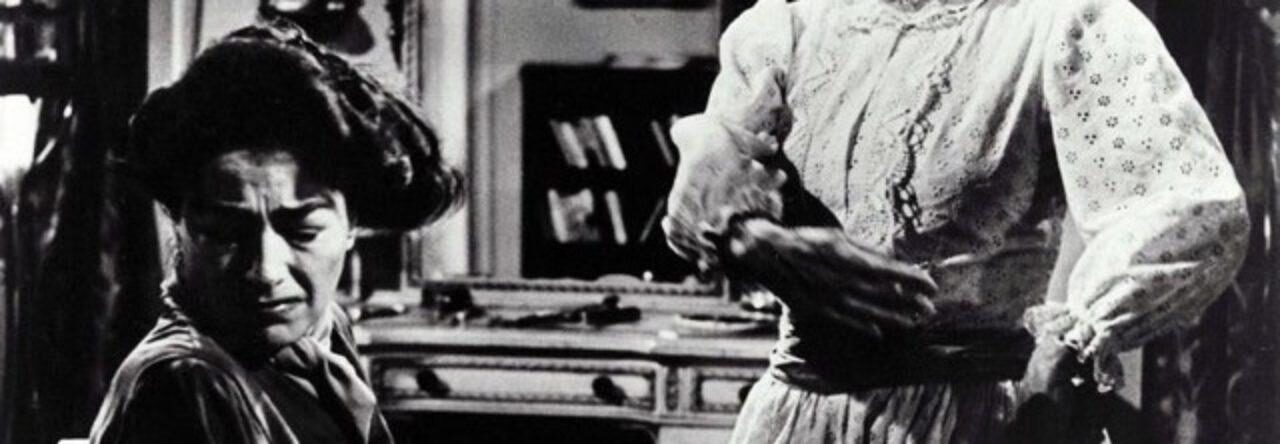
Look what the homosexuals have done to me!

Author: Cranky Lesbian Page 7 of 54

Cranky Lesbian is a disgruntled homosexual with too much time on her hands. Click for film reviews or to follow on Instagram.

Paula Abdul is Touched by Evil in Her TV Movie Debut

Paula Abdul gets mixed up with a cold-hearted snake in Touched by Evil.

If there are words that could accurately convey the fathomless stupidity of Touched by Evil, Paula Abdul’s 1997 telefilm debut, they are lost to me as I ponder what might be the dumbest film I’ve ever seen—and I am someone who has, through an unusual series of events, endured Moment by Moment more than once. My problems are less with Abdul, whose cheetah print poster hung above my bed in the early ’90s (alongside a gallery of New Kids on the Block posters), than with Phil Penningroth’s screenplay, which trivializes rape and treats not only viewers, but the characters themselves, as nincompoops.

Abdul’s Ellen Collier, newly divorced from MC Skat Kat, is attempting to forge a new life and career as a single woman when she’s attacked in her condo by the prolific Northside Rapist, who subsequently torments her with harassing phone calls. One of the few pieces of information she is given about her assailant is that he evades detection by always driving a different vehicle. You might assume this fact would give her pause when car detailer Jerry (Adrian Pasdar, oozing sleaze), keeps running into her and trying to make her acquaintance. But Ellen, though hyper-alert in other areas of her life, doesn’t find it strange at all. Even more unbelievably, her friends (Susan Ruttan and Tracy Nelson) begin pressuring her to date him shortly after the assault.

The Bedroom Window: Isabelle Huppert and… Steve Guttenberg?!

Isabelle Huppert and Steve Guttenberg in The Bedroom Window.

The Bedroom Window’s central mystery is not the identity of its killer, who stalks the streets of Baltimore raping and murdering young women he spots in bars. Nor is it how Steve Guttenberg’s Terry Lambert, the slick protégé of a construction executive, will clear his name after becoming hopelessly ensnared in the resulting investigation. It is, instead, how Guttenberg gets Isabelle Huppert’s Sylvia Wentworth, his boss’s wife, to come home with him. To that question, I maintain, writer-director Curtis Hanson provides no reasonable answer.

Was she enchanted after seeing him roller-skate his way through the Village People classic Can’t Stop the Music in his tightest pants and shorts? (Guttenberg doesn’t strut his stuff on wheels here, but ditches his clothes more than once.) Did the greatest screen actress of her generation secretly adore Police Academy? In the end, it doesn’t matter: The Bedroom Window is made more interesting by its unusual casting. And, just as importantly, it holds a special place in my heart for its repeated use of Robert Palmer’s “Hyperactive.”

My unabashed fondness of this dated ’80s song in a dated ’80s movie is sentimental in nature. “Hyperactive” reminds me of all the great loves of my life, from the one who danced wildly in her pajamas each week to the Mad Men theme to the one who “puts her makeup on at 6 am,” then “goes to work, gets home and puts it on again.” Window’s resident whirling dervish is Terry himself, an affable schemer eager to climb not only the corporate ladder but an icy Sylvia, whose philandering is more a byproduct of boredom than passion.

Murder is Genetic (and Campy) in Tainted Blood

Raquel Welch butches it up in Tainted Blood.

In Arsenic and Old Lace, Cary Grant’s character famously quips “You see, insanity runs in my family. It practically gallops.” Tainted Blood, a 1993 made-for-TV thriller starring the tiniest bits of Raquel Welch and Joan Van Ark’s original faces, takes that premise and stigmatizes it within an inch of its life—it would make you cry uncle, if you weren’t afraid that he, too, would show up and go on a killing spree.

Welch, inexpressive as ever in a series of drably colored power suits, plays Elizabeth Hayes, a bestselling author of books about “the breakdown of the American family” and “prostitute spies in Washington, D.C.” We meet her as she crashes a funeral in Oklahoma, where high school athlete Brian O’Connor (John Thomson) shot his parents and then himself in a crime that left their small town reeling. Her instincts for tabloid journalism are rewarded when Brian’s grieving aunt (Molly McClure) reveals her adopted nephew was born in a psychiatric hospital.

The Golden Girls: “Break In” Episode Recap

Rose is armed and dangerous in “Break In.”

“Break In,” the eighth episode of The Golden Girls’ first season, begins inauspiciously, with the roommates returning home from a Madonna concert. After some cursory jokes—Sophia calls her a “slut,” while Dorothy remarks “She did things on that stage I never did with my husband!”—they’re shaken to find the house was burgled in their absence.

Dorothy takes charge while the rest of the girls cower, deepening her voice and bellowing her best Dirty Harry threats. Satisfied the hoodlums have long since skedaddled, Sophia heads off to her bedroom. Blanche and Rose try to stop her, with Rose exclaiming “You can’t. It could be dangerous!”

“Please, I’m eighty,” Sophia replies. “Bathtubs are dangerous!” As Rose anxiously babbles to herself in the living room, Blanche and Dorothy check on their valuables. Dorothy’s stole, a gift from Stan, was taken, and Blanche has an announcement of her own upon exiting the kitchen, her face and blouse covered in flour.

Blanche: They got my jewels.

Dorothy: But I see they didn’t get your cocaine.

Rose: Oh, my God! Blanche has cocaine?

Old Man Body, Old Man Slippers [Updated]

All good slippers are ancient and covered in dog fur; mine are no exception.

Some of you have reached out in recent weeks with words of encouragement or to ask what’s going on, and I wanted to provide a quick update and also say thanks. Here’s where things stand:

  • After nearly two years of strange health problems and many unhelpful tests and appointments, my PCP referred me to a neurologist. That doctor then referred me to a movement disorder specialist (MDS), another type of neurologist, believing I had cervical dystonia.
  • In February, the MDS confirmed that diagnosis and also found I was generally dystonic. I’m an all-around shaky sonofab*tch, and she noted other movement disorder symptoms that are mentioned here.
  • The most effective treatment for dystonia is Botox. Today was my first round of neck injections, with a bonus shot or two in my shoulder. I’m not fearful of needles, as you might expect of someone who injects immunosuppressants 78 times per year, so that was uneventful, though I’m concerned my neck might start behaving like a Real Housewife now that it’s been Botoxed. If the injections work, she’ll administer them quarterly.
  • This week the MDS additionally suggested I try carbidopa/levodopa, also known as Sinemet. This can help with some forms of dystonia, though it is more widely known for treating Parkinson’s, which has its own special relationship with dystonia. I agreed to try it. That experiment begins in the coming days and I’m having a brain MRI next week. My symptoms are largely left-sided and that can help rule out a stroke, which is unlikely at my age.
  • 3/20 update, Botox: It took the Botox a week to settle, just as the doctor predicted. My neck is no longer stuck in one place, and any fears that it would turn into Luann de Lesseps were misplaced. Unfortunately, my shoulder remains a work in progress. It was hard to open my mouth for a couple days post-Botox, which dampens whatever interest I might’ve had in attempting to treat my oromandibular (jaw and mouth) dystonia with injections.
  • 3/20 update, MRI: My brain MRI was normal, as the neurologist expected; it was a formality to verify there was no evidence of stroke or multiple sclerosis. There was also a neck MRI, which showed arthritic damage and several “mildly bulging discs” that might exacerbate my arm and shoulder problems.
  • 3/20 update, Levodopa: I’m taking carbidopa/levodopa to see if my motor symptoms respond to it. I’m not sure what upset my wife more, that I was prescribed this medication or that I’ve had a positive response to it, but so far it has gone well. If that continues, it raises the question of whether I have dopamine-responsive dystonia (DRD), which seems unlikely for a couple reasons, or if my dystonia is a feature of Young Onset Parkinson’s Disease (YOPD). Since I have some symptoms of the latter, going back to as early as 2013, we’re more concerned about that possibility right now.

How do I feel about this? I don’t know. It seems pointless to get worked up over anything when we’re uncertain whether the dystonia will worsen, or if it’s a standalone issue or harbinger of something else. My wife is wired differently and this has been hard on her—she was unmoved by my idea to review Awakenings (streaming free at Amazon!) once I’ve taken levodopa for a few weeks.

In Which I Conclude That I’m Kind of an Idiot

This embroidered piece is my latest Hitchcockian artwork acquisition.

The brain is my wife’s favorite organ, one she studied for years even prior to medical school, and she speaks of it with the kind of passion and reverence I normally reserve for Judith Light. When we met, she could tell I was neurologically “different,” which means less than you might think. “Different” brains, like bad childhoods and pretty much everything else that’s currently having a prolonged (and occasionally irksome) cultural moment, are a dime a dozen. Possessing one makes you no more virtuous or villainous than anyone else, no matter what the Internet tells us. Heck, most of you reading this right now probably have unusual brains—who else enjoys Afterschool Specials that much?!

Nevertheless, in the early days of befriending and then dating a physician, I often felt strangely vulnerable. It reminded me of how tennis players describe the brutal solitude of the court in exposing their deficiencies. (Pete Sampras, a master chronicler of this, said “It’s one-on-one out there, man. There ain’t no hiding. I can’t pass the ball.”) Before our first date, I laid my cards on the table: the lifelong history of IBD, the surgeries, the related conditions. And, less importantly, a former partner’s insistence, equal parts bitter and rueful, that I was autistic and therefore at least partially defective.

A Pain in the Neck

Sophia might be on to something.

Here’s the obligatory follow-up to the ongoing saga of my body not being a wonderland: I saw the neurologist at the movement disorder clinic this week, which was earlier than expected. She confirmed the diagnosis of cervical dystonia and threw in a curveball that hit me right in the face (on account of the clumsiness) by asserting that I belong to a smaller subset of patients whose dystonia extends to other locations. It’s not just confined to my neck.

To be clear, I’m not shaky on the order of Katharine Hepburn… yet. But who knows what the future holds, because she explained that, for some of us, things “progress.” This isn’t what one expects to hear at the culmination of a long strange trip with origins in their underarm, of all places. Admittedly, I’ve not been a model of great health during my brief tenure on this planet, but my biggest problems have reliably involved bodily systems light years away from the brain.

Kenny Rogers Has a Midlife Crisis in Wild Horses

Kenny Rogers says “Take this job and shove it” in Wild Horses.

No nobler a beard graced the small screen throughout the 1980s than that of Kenny Rogers, who stuck with made-for-TV movies (and wood-fired rotisserie chicken) after the box office underperformance of Six Pack, his feature film debut. Lost in the shadow of his popular Gambler series, you will find 1985’s Wild Horses sandwiched between the creatively titled The Gambler: The Adventure Continues and The Gambler: The Legend Continues.

If you’ve ever asked yourself what might’ve happened if The Night They Saved Christmas was produced by Menahem Golan and set in the Wild West with Rogers (or his equine counterpart, a majestic stallion) as Santa Claus, the answer is Wild Horses. Seemingly crafted for an audience of seven-year-old boys, with a little something tossed in for any maternal figures in their lives who might have flung underwear onstage at Wayne Newton concerts of yore, this finds Rogers staring down the barrel of a blue collar midlife crisis, wistful for his glory days as a champion rodeo cowboy.

Medical Mystery Probably Solved

Not pictured: Dr. Seth Hazlitt, who was busy with chowder.

This week I disappeared from the Internet (much to the Internet’s relief) to take care of a medical issue. I’ve had problems with the upper left part of my body for over a year now and was subjected to CTs, mammogram and an MRI during that time, mostly to confirm nothing needed to be biopsied. Fortunately, I got the all-clear on that. But the unexplained pain and discomfort continued, disrupting my sleep and enhancing my crankiness.

I returned to the PCP recently and asked what to do next. She considered an orthopedist referral before sending me to a neurologist. This week, after a physical exam, the neurologist thinks he has identified the problem. It’s something I hadn’t heard of before: cervical dystonia, also known as spasmodic torticollis. The word “spasmodic” conjures images of wrenching spasms or tremors, but I’ve experienced neither.

Because Mommy Works: The Nightmare of Having a Self-Sufficient Mother

Anne Archer is a persecuted parent in Because Mommy Works.

From Stella Dallas to Kramer vs. Kramer, there’s no tearjerker quite like the separation of parent and child, and Because Mommy Works (1994) is no exception. An NBC production that found a second home on Lifetime, it could more accurately be called Because Daddy’s a Dipshit. And while its plot and resolution are likely to astonish or even amuse younger or more sheltered viewers who don’t take it seriously, the ’90s were indeed still a time when mothers, unlike fathers, were legally penalized for working or attaining higher education.

Anne Archer plays Abby Forman, a cardiac care nurse and mother to six-year-old Willie (Casey Wurzbach of Gramps). Her ex-husband, Ted (John Heard, a specialist in detestable characters), has spent nearly half of Willie’s life largely absent from it, doing whatever he pleases, but believes he has fulfilled his fatherly obligations by never missing a child support payment. Now remarried to homemaker Claire (Ashley Crow, who makes the most of a small but complex role), he reappears to hassle Abby for having the temerity to think that she, like him or any other working father, can effectively parent while also holding a job.

Page 7 of 54

Powered by WordPress & Theme by Anders Norén