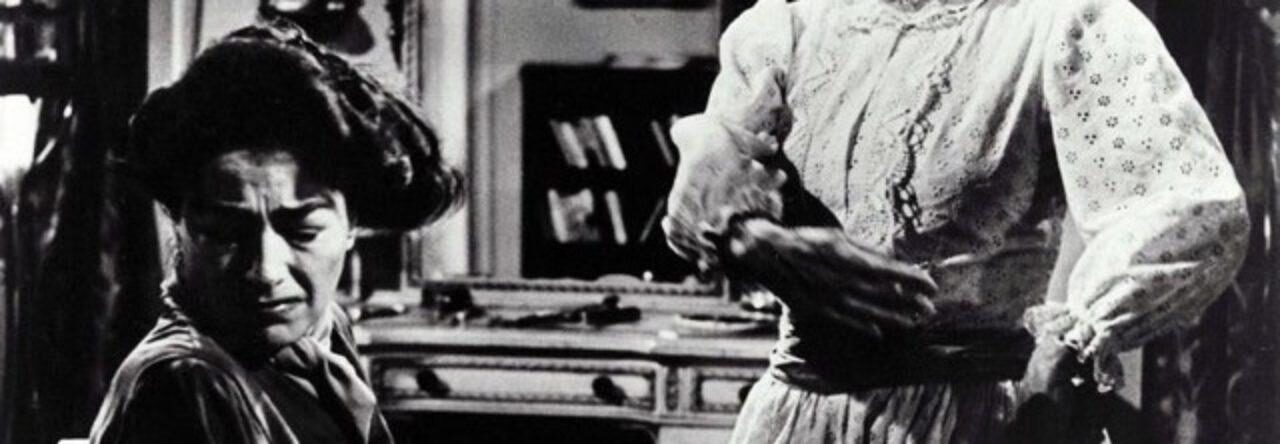
Look what the homosexuals have done to me!

Author: Cranky Lesbian Page 5 of 54

Cranky Lesbian is a disgruntled homosexual with too much time on her hands. Click for film reviews or to follow on Instagram.

The Price She Paid: Loni Anderson’s Bitter Custody Fight

Loni Anderson prepares to perform “Batdance” while dressed as Prince.

If there’s anything more enjoyable than a terrible wig in a TV movie, it’s a terrible wig atop the head of beloved superstar Loni Anderson, who brought us both my favorite mother-daughter prostitution film, My Mother’s Secret Life, and my favorite unnecessary remake of a Barbara Stanwyck classic in Sorry, Wrong Number. In The Price She Paid, a 1992 CBS telefilm that found a second home on Lifetime, she wears a shaggier, peroxide version of Patrick Duffy’s Daddy ‘do that blinds you as it draws you in, as if to ensure your attention doesn’t wander.

Anderson fans can be forgiven for wondering whether The Price She Paid is a biopic about her many financial disputes with Burt Reynolds — sadly, the answer is no. It’s about the emotionally bruising and politically charged custody fight her Lacey Stewart, single mother to 12-year-old R.T. (Coleby Lombardo), is plunged into when the boy’s father, her rapist, is paroled. And I’m serious when I say that Anderson, typically faulted here for her vacant expressions and robotic delivery, acquits herself nicely when the screenplay serves up something meaty.

Gramps: Andy Griffith Romps as a Homicidal Grandfather

Andy Griffith strikes a match in Gramps.

“Sometimes things happen between grownups that’s hard for kids to understand,” Gramps’s Jack MacGruder (Andy Griffith) gently counsels his grandson Matthew (Casey Wurzbach), whose parents are fighting again. (Wurzbach was last seen enduring yet another domestic ordeal in Because Mommy Works.) He might as well be addressing viewers who are similarly confused about the plot of this made-for-TV movie, which premiered on NBC in 1995 and also aired under the title Relative Fear.

Jack, a retired musician who claims to have worked with the likes of Hank Williams and Elvis, enjoys a rapprochement with his long-estranged son Clarke (John Ritter), a successful lawyer, following a death in the family. Eager to win Matthew’s affections, he plies the boy with ice cream and candy bars, tosses him a football and teaches him how to climb a tree. He kindly refrains from instructing him in arson, a skill we already know he’s mastered from Gramps’s opening scene.

The Joker Card: Parkinson’s at 40

Let’s cut to the chase for this one, without our usual banter. This week the neurologist confirmed that my recently diagnosed dystonia is a symptom of what we hope is young-onset Parkinson’s disease (YOPD). I say “hope” because there are a few exceedingly unattractive alternatives that are initially difficult to distinguish from Parkinson’s. All are clinical diagnoses, not things she can easily test for, and while those rare conditions are likelier to strike people 60 and older, some can emerge in one’s forties. You can read more about YOPD here.

My wife, Crankenstein, accompanied me to the appointment because she knew what was coming and wanted to talk with my movement disorder specialist (MDS). She shared observations about my muscle rigidity and bradykinesia, sleeplessness, diminished sense of smell and increasingly inexpressive face, which the doctor also noticed. We cataloged the positive changes that I experienced on carbidopa/levodopa, a Parkinson’s medication. Mostly I sat there trying to fend off trepidation after my physical exam left Crankenstein ashen.

Patrick Duffy is Our Preacher-Teacher in Danielle Steel’s Daddy

Patrick Duffy and Lynda Carter in Daddy.

In Daddy, Danielle Steel’s treacly ode to the humble American paterfamilias, generations of Watson men suffer as nobly as Juanita Moore in Imitation of Life or Barbara Stanwyck in Stella Dallas. At least that’s what Steel wants us to believe. But the socioeconomic differences are hard not to notice—the only Watson man who struggles to provide for a child on his own is 18-year-old Ben (Ben Affleck), stubbornly proving his honor in a short-term experiment before allowing his wealthy father to bankroll a custody battle.

Oliver (Patrick Duffy), Ben’s dad, is a Chicago advertising executive so happily married to Sarah (Kate Mulgrew, angry as usual) that glamorous TV star Charlotte Sampson’s plunging décolletage barely registers when they meet at work. Charlotte (Lynda Carter of Hotline) will feature in his latest perfume campaign, and she’s somehow drawn to Oliver, whose poofy salt-and-pepper hair helps him resemble a human Q-Tip from afar. “I have the life I’ve always wanted and I’m smart enough to know it,” he contentedly tells a colleague, but life has other plans.

Rob Lowe Makes Room for Daddy in Schoolboy Father

Rob Lowe in Schoolboy Father.

Our first indication that 16-year-old Charles Elderberry (Rob Lowe) isn’t ready for parenthood comes early in Schoolboy Father (1980), an Afterschool Special about the dangers of reproductive illiteracy. As his judgmental mother (a solid Sharon Spelman) reads a birth announcement involving Daisy Dallenger (Dana Plato), a girl he met at summer camp, Charles begins counting on his fingers. Later, he asks a friend if pregnancy always takes nine months. It’s information he could’ve used before roasting more than marshmallows with Daisy, if you catch my nonsensical drift.

Because mothers and newborns weren’t booted from American hospitals within 24 hours in the early 1980s, Charles has time to consider his options. Inconvenienced by the $2 parking fee, he nevertheless visits daily, staring at his son through the nursery glass. Daisy, who harshly dumped him on the last day of camp, never said a word about her pregnancy, not even after being temporarily kicked out of her parents’ house. When Charles asks whether she used protection with him, she retorts “You were there, did you?” before ruefully observing “Not that it matters much now.”

No One Would Tell: When Teen Romance Turns Deadly

Candace Cameron and Fred Savage in No One Would Tell.

There’s a power in the casting of No One Would Tell (1996) that might be lost on younger viewers, but for children of the ’80s and ’90s, Kevin Arnold abusing D.J. Tanner was about as shocking as “Beaver” Cleaver giving Gidget a black eye. Based on the chilling true story of 14-year-old Amy Carnevale’s murder at the hands of her high school boyfriend, it stars Fred Savage as senior Bobby Tennison, a standout wrestler who can’t control his anger when girlfriend Stacy Collins (Candace Cameron) acknowledges the existence of anyone who isn’t him.

His rages — and her hidden bruises — multiply each time she laughs with pals, wears a miniskirt in public or exchanges pleasantries with male classmates. “Yeah, so he gets a little jealous, OK? Guys are like that,” she tells worried friend Nicki (Heather McComb). It’s a lesson she picked up at home, where mother Laura (Michelle Phillips) excuses the controlling behavior of boyfriend Rod (Paul Linke) despite Stacy’s concerns. After lashing out physically, Bobby turns into the domestic violence version of a Fisher-Price See ‘n Say.

Tennis: 2023 Clay Court Season

“And so we meet again.”

First, a housekeeping note: Roland-Garros begins on May 28th and my posts about that and other miscellany will be hosted elsewhere. You can send a link request through the ‘Contact’ page if you want one.

As the Italian Open concludes this weekend without my favorite players, Iga Świątek and Carlos Alcaraz, I can’t help but feel slightly nervous about Roland-Garros, which is just around the corner. On the ATP side, Rafael Nadal’s absence from the draw creates no small amount of intrigue. And the WTA points race is as suspenseful as it’s been in years, with Aryna Sabalenka in striking distance of toppling Świątek in the rankings. Their exciting rivalry heated up this clay court season, with Świątek defending her title at Stuttgart and Sabalenka prevailing in Madrid.

Lace: Motherhood’s a B*tch

“Is that any way to talk to your mothers?”

Let’s say it now, in unison, to get it out of the way: “Incidentally, which one of you b*tches is my mother?” That notorious question, from 1984’s Lace, is Phoebe Cates’s most enduring contribution to cinema that doesn’t involve a red bikini. And it cuts jaggedly to the neon-pink heart of this ABC miniseries, a soapy, sprawling maternity mystery that plays like the most scandalous Facts of Life episode never made.

Adapted by Elliott Baker from Shirley Conran’s saucy novel, Lace is first set in 1960 and tells the story of three friends and roommates at a Swiss boarding school: the pouty French Maxine Pascal (Arielle Dombasle); sardonic Brit Jennifer ‘Pagan’ Trelawney (Brooke Adams); and adventurous American Judy Hale (Bess Armstrong), who entertains her friends with passages from a bodice ripper she scribbles between classes that features a heroine called Lucinda Lace. It’s a name the pals use interchangeably when one of them finds herself pregnant on the eve of graduation, and the trio form an unusual pact of secrecy to protect her at any cost.

Nocturnal Omissions

First of all, TV movie fans, I’ve planned something special for Mother’s Day, so stay tuned for that. But this post is about a sleep experiment recently conducted to better answer my neurologist’s question about overnight behaviors. An ex complained quite a bit about my sleep but my deep-sleeper wife never has, so I needed a way to watch it myself.

Betrayal of Trust: Judith Light Confronts a Predatory Doctor

Judith Light with Betty Buckley in Betrayal of Trust.

If you previously thought I was nuts for calling Judith Light the Maria Falconetti of American TV movies, wait until you hear my theory that her late ’70s arc on One Life to Live as housewife-turned-hooker-turned-murderer Karen Wolek is the soap equivalent to Jeanne Dielman, 23, quai du Commerce, 1080 Bruxelles. Light’s legendary courtroom breakdown scenes as Wolek (seen here in a 1997 ABC retrospective hosted by Reba McEntire) contained some of the finest acting in the history of daytime television and prepared us for her telefilm work to come, including 1994’s Betrayal of Trust.

Based on a true story, Betrayal recounts singer Barbara Nöel’s years of abuse at the hands of Jules Masserman, a psychiatrist and psychoanalyst played by Judd Hirsch with a nearly perpetual scowl. Nöel (Light) sought treatment for complaints including performance anxiety, for which Masserman suggested the “Amytal interview,” guided therapy sessions involving the highly addictive barbiturate sodium amytal. “Your subconscious will reveal itself to you in new and exciting ways,” he assures her. “You know, Barbara, sometimes this world can seem like a very frightening place. But now you’ll begin to relax. To feel safe and happy. And all the bad feelings of the past will begin to melt, melt away.”

Page 5 of 54

Powered by WordPress & Theme by Anders Norén