Cranky Lesbian

Look what the homosexuals have done to me!

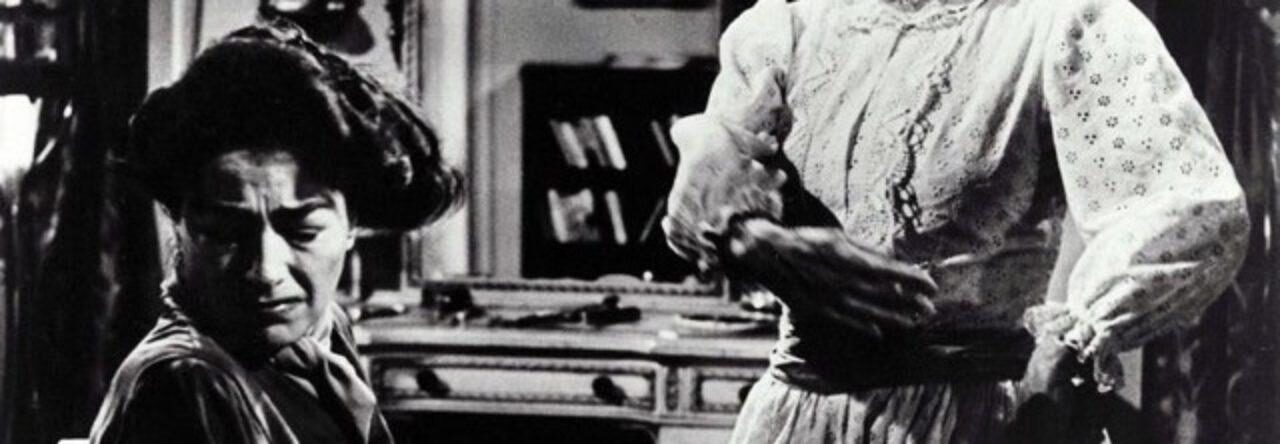
Valerie Harper Demonstrates the Perils of Allowing Women to Drive in Night Terror

“Mare, I think I saw something nasty in the woodshed…”

Fans of Arrested Development will be familiar with J. Walter Weatherman, a character used to scare the crap out of children while teaching them valuable lessons (such as “And that’s why you always leave a note”). In the 1977 TV movie Night Terror (also known as Night Drive), Valerie Harper is our J. Walter Weatherman. The lesson? “And that’s why you always check your fuel gauge.”

Not once but twice does Harper’s Carol Turner, a doting wife and mother of two young children, neglect to keep her tank filled, and for that she nearly pays with her life. However, I would argue that her husband, Walter (Michael Tolan), is the real jinx who brought this curse upon her the second he smugly told her sister Vera (Beatrice Manley), “Your sister survives because I’m organized.”

Here Comes the Jackpot Question in Advance

Once, when I was young, it was early March and a woman I was soon to fall in love with sent me a recording of Ella Fitzgerald’s “What Are You Doing New Year’s Eve?” as performed with the Frank De Vol Orchestra. An aching three-minute melancholy swoon, it was the simplest but most romantic overture I had ever received.

Years later our relationship would end quite unceremoniously on New Year’s Day. That was a long time ago but this is a permanently trying time of year for me, meant for drowning one’s sorrows in chocolate milk and carbs and Barbara Stanwyck films. Happy New Year to everyone reading this. Please stay away from germy m’fers. I’ll be back on Sunday with another review.

Answering the Most Pressing Question of the ’90s: Mother, May I Sleep with Danger?

“God, Mom, you’re so lame. You never let me sleep with danger!”

It always happens like this, doesn’t it? You try to spread holiday cheer by writing about Ebbie, an old Susan Lucci Lifetime adaptation of A Christmas Carol, and through a convoluted series of events find yourself weeks later watching Mother, May I Sleep with Danger? because of it. Who among us hasn’t done it? It’s the tale as old as time that Angela Lansbury so touchingly warbled about in Beauty and the Beast.

Rue McClanahan Plans a Wedding and a Funeral in Mother of the Bride

The ever-expanding Becker-Hix family in Mother of the Bride.

What a whirlwind of a week it has been. It was only Monday that I first met the Becker-Hix family, who had gathered to quarrel, self-destruct, and reveal the occasional secret in Children of the Bride (1990), all while celebrating their mother’s marriage to a significantly younger man. And it seems like just yesterday (because, in fact, it was) that Baby of the Bride (1991), its first sequel, incensed me by turning that amiable husband into a floppy-haired jerk who threw a 90-minute fit when his wife wouldn’t have an abortion.

To say my hopes weren’t high for the final entry in this made-for-TV trilogy, 1993’s Mother of the Bride, would be an understatement. How surprised I was, then, to find this the most enjoyable installment of all. In the words of Vanessa Williams, “Just when I thought our chance had passed, you go and save the best for last.” That’s right, stars and executive producers Rue McClanahan and Kristy McNichol, that song is dedicated to you.

Rue McClanahan Explores Geriatric Pregnancy in Baby of the Bride

McNichol gave birth to a baby girl; McClanahan a bouncing baby wig.

When last we met, dear reader, we were enjoying the emotional highs and lows of Children of the Bride (1990), in which Rue McClanahan’s offspring squabble against the backdrop of her wedding to a younger man. Baby of the Bride (1991) picks up shortly thereafter, as Margret (McClanahan) and John Hix (Ted Shackelford) return from their honeymoon, but instantly we see things have changed.

The camera lingers on a recreation of the wedding photo from Children. Patrick Duffy has been replaced by his Dallas castmate Shackelford. Dennis, the son who can’t keep his pants zipped, is now played by John Wesley Shipp in place of the more lighthearted Jack Coleman. Their faces are curiously free from bruises, reminding us that the centerpiece of the first film was a kooky brawl the night before the wedding that left a mark on several characters.

Rue McClanahan’s Matriarch Trilogy Begins with Children of the Bride

Children of the Bride‘s one big happy family

While I’m stuck on the couch for the next couple weeks, having been told to avoid the Omicron surge while immunosuppressed, the timing seems right to dedicate myself to the study of one of the holiest trilogies in cinematic history: Rue McClanahan’s made-for-TV Bride series.

This is where it all began, folks, in 1990, with Children of the Bride. The credits, including “Special Guest Star Patrick Duffy” and “Music by Yanni,” hint at something memorable. Things begin promisingly, with Kristy McNichol dressed as a nun, and of course I’m here with a screen cap for those of you who are into that sort of thing. And who’s that over there, once again not acting too homosexual? Why, it’s Dynasty’s second Steven Carrington! They are but two of McClanahan’s many kids, one more troubled than the next.

Susan Lucci’s Schlocky Scrooge Turn in Ebbie

Susan Lucci plays Ebenezer Scrooge in Ebbie, a Lifetime holiday classic.

Who knows what Lifetime Television viewers did back in 1995 to earn a spot on Santa’s naughty list (we were still a year away from asking Mother, May I Sleep with Danger?), but boy were we richly rewarded with Ebbie. A holiday classic for the ages, this modern retelling of A Christmas Carol, set in a department store, established All My Children star Susan Lucci as the finest cinematic interpreter of Dickens since David Lean—and gave us all the beautiful gift of reading “Taran Noah Smith as Tiny Tim” in the opening credits.

Lucci stars as Elizabeth ‘Ebbie’ Scrooge, a cutthroat store owner who kicks things off by telling her right-hand woman, Roberta (Wendy Crewson) of a malfunctioning musical window display, “Tonight is their final performance!”

“But Elizabeth,” Roberta exclaims, “Dobson’s Christmas windows are a tradition!”

“Spare me,” Ebbie rants (she later says the same of Christmas carols). “Tradition is a thing of the past, Roberta Cratchit. It would cost me a fortune to get those puppets repaired. Besides, I’m running a business here, not some G-rated peepshow. Next year I want merchandise in those windows.”

Just Between Friends, a Mary Tyler Moore Vanity Project from Hell

Lou Grant would not approve.

When I think about the 1980s and its enduring cinematic celebrations of the decade’s twin passions of aerobics and bad taste, Just Between Friends, a Mary Tyler Moore vanity project from hell, outranks even Perfect. That James Bridges film, in which Jamie Lee Curtis and John Travolta gyrate their way to cardiovascular fitness—and love—will one day earn a post of its own, but today we probe the shameless and admittedly shallow depths of Just Between Friends.

A modest, unintentionally mortifying monument to the self-obsession of celebrity, here we have a film starring Mary Tyler Moore that was written, directed and produced—under the auspices of her MTM Productions—by Allan Burns of Mary Tyler Moore Show fame. (He also penned the Kristy McNichol vehicle Just the Way You Are.) Much of that classic sitcom’s finest humor sprang from its sly, playful framing of arrogant characters. There’s arrogance to spare in Just Between Friends, but the filmmakers don’t realize it’s their own, or that it’s funny.

For One Special Night, a Wintry Andrews/Garner Reunion

Julie Andrews and James Garner reunite in One Special Night

From the earliest moments of One Special Night, you know that Catherine (Julie Andrews) is driving a uniquely impractical car in a snowstorm for a reason. Less expected, perhaps, is the explanation—it’s to help facilitate a meet-cute in a hospice.

That’s where she goes to pass quiet moments in the room where her late husband stayed. That the room is seemingly available on-demand is one of many contrivances here, in this 1999 holiday telefilm that aired on CBS. It’s also where she meets Robert (James Garner), a devoted husband visiting his dementia-afflicted wife, who has suffered a series of heart attacks.

Bea Arthur Revisits the Past in My First Love

Bea Arthur takes a look back in My First Love.

Like most self-respecting gay folks, I’ve watched The Golden Girls in its entirety more times than I can count. It was comfort food in our household in the earliest months of this year’s lockdown, as it has been before. My wife and I turned to it again recently, following the death of a loved one from COVID-19. This week, a search for Golden Girls-adjacent streaming content yielded an interesting find: Bea Arthur in My First Love. It’s currently available for free on Amazon Prime and Tubi. Non-members can digitally rent or purchase on Amazon for a small fee.

A wife in mourning

This 1988 TV movie stars Arthur as Jean Miller, a widowed driving instructor and traffic school teacher from the Bronx. Jean spends her evenings watching the videotaped last will and testament of her husband, who died nine months earlier. At the urging of her best friend, Ruth (Barbara Barrie), she sorts through mementos of her marriage. (Here we should note that Barrie’s hair is an unmistakable nod to Rue McClanahan.) That’s when Ruth spots a bundle of letters from Sam Morrissey, Jean’s high school sweetheart. Some, she observes, were exchanged even after Jean was married.

Page 22 of 54

Powered by WordPress & Theme by Anders Norén