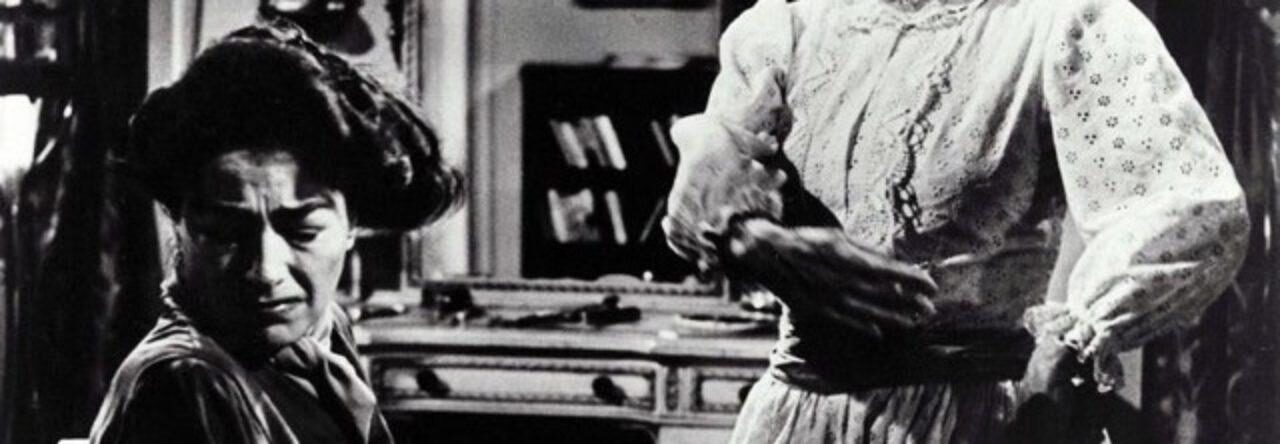
Look what the homosexuals have done to me!

Author: Cranky Lesbian Page 4 of 54

Cranky Lesbian is a disgruntled homosexual with too much time on her hands. Click for film reviews or to follow on Instagram.

Vows of Deception: Cheryl Ladd’s Trashy Femme Fatale

Cheryl Ladd and Nick Mancuso in Vows of Deception.

Disappointingly, given its title and “inspired by actual events” origins, Vows of Deception isn’t a Lifetime dramatization of Renée Zellweger and Kenny Chesney’s marriage. But Vows, which aired on CBS in 1996, makes up for that shortcoming by giving Cheryl Ladd an enjoyably trashy role to sink her teeth into as Lucinda ‘Lucy Ann’ Michaels, a prodigiously pregnant recent parolee who moves cross-country to live with Terry (Nancy Cartwright), her more responsible sister.

“My past doesn’t determine my future,” she unconvincingly tells Matt Harding (Nick Mancuso), the detective who meets her at a bus stop with papers to sign. Apparently lacking any crimes to investigate, he offers her a ride and later enlists her help in pranking his best friend Clay (Mike Farrell), a prosperous lawyer, in a blind date setup. Instantly smitten, Clay surprises them both by continuing the date despite her baby bump. Earnest to a fault, he couldn’t be an easier mark for a dazzling criminal with a questionable tale of woe (she claims an abusive ex falsely accused her of child abuse).

Second Serve: Vanessa Redgrave Plays Doubles in Richards Biopic

Vanessa Redgrave in Second Serve.

For simplicity’s sake, both male and female pronouns are used for Richard and Renée. It’s not a political commentary, it’s a reflection of how the story is told.

There is initially something jarring about Vanessa Redgrave’s performance as Renée Richards, the pioneering transgender athlete, in Second Serve. Her unconvincing male appearance pre-transition conjures memories of Jean Arless as gawky Warren in William Castle’s Homicidal, a classic Psycho knockoff with a memorable gender gimmick, and you worry this 1986 CBS adaptation of Richards’s autobiography might cheapen a complex story. But it doesn’t take long for the magnetic Redgrave to draw you in, particularly when filmed in medium-closeups that remove her hips from the equation.

We’re introduced to Renée first as Dr. Richard Raskind (changed to Radley for the film), and Redgrave exudes an Anthony Perkins quality—lanky, haunted, her demeanor alternately reserved and impetuous—that suits the character well. You suspect she understands Richard, whose private struggles with gender dysphoria aren’t immediately revealed, more intuitively than director Anthony Page (I Never Promised You a Rose Garden) and screenwriters Gavin Lambert and Stephanie Liss. Yet there are limits to her powers of empathy: you’d never guess from Redgrave’s vaguely WASPy characterization (and sometimes thinly-suppressed British accent) that she’s playing a Queens-bred Jew.*

Wimbledon 2023 Concludes

“You could’ve cut the sexual tension between Billie Jean King and Kate Middleton with a knife…”

“Are you crying?” It’s the three-word question my wife asks at the conclusion of nearly every Grand Slam tennis tournament, and this afternoon she posed it after coming downstairs to find me crumpled on the living room floor just seconds after the men’s final ended. The answer, of course, was yes.

“Juan-Carlos Ferrero is crying, I think his dad is crying… His mom and I have been crying since match point,” I replied. (During his post-match interview, even Novak Djokovic was in tears of an unhappier sort.) My favorite women’s player, Iga Świątek, was bounced from Wimbledon in the quarterfinals by Elina Svitolina, a better showing than last year’s and cause for great optimism about her chances in 2024. And now my favorite men’s player, Carlos Alcaraz, #1 in the world and barely 20 years old, was climbing into the stands to embrace his family ahead of the trophy presentation.

Behold the Magic and Wonder of Tears and Laughter: The Joan and Melissa Rivers Story

Joan and Melissa Rivers in Tears and Laughter.

You can keep your Mildred Pierce and Mermaids, your Steel Magnolias and Terms of EndearmentTears and Laughter: The Joan and Melissa Rivers Story (1994) is the greatest mother-daughter movie of all-time. “But what about Mommie Dearest?” you might counter. “What about Volver, Imitation of Life, Freaky Friday or Postcards from the Edge?”

To which I can only reply that Tears and Laughter is a dramedy about producer Edgar Rosenberg’s suicide starring his actual widow, Joan Rivers, and their daughter Melissa, a non-actress whose performance is the made-for-TV equivalent of Sofia Coppola’s maligned turn in The Godfather Part III. If you love things that are terrible, it gets no better than this, a tearjerker that opens with liposuction jokes and excerpts from a typical Rivers routine: “I went to Las Vegas, I threw my hotel key up at Tom Jones. He took it and burglarized my room.”

Teen Runaways Fall Prey to a Pimp in Little Ladies of the Night

Linda Purl in Little Ladies of the Night.

Paul Schrader, the Taxi Driver scribe who later wrote and directed Hardcore, wasn’t the only 1970s auteur preoccupied with sexually exploited minors. “Jiggle TV” mega-producer Aaron Spelling threw his feathered fedora into the ring with Little Ladies of the Night in 1977, scoring a ratings blockbuster for ABC with a tonally confused production that regards teenage prostitution—and all the physical and sexual violence it entails—as a gig worse than the average fast food shift but better than Yves Montand’s trucking assignment in The Wages of Fear.

Its opening narration is our first clue that Little Ladies, scripted by Hal Sitowitz and directed by Marvin J. Chomsky (The Deliberate Stranger), is an unserious film about a serious topic. Calling the teen runaway crisis “a major social issue,” it warns parents of the dangers that await children on the street. “You don’t want to find your kids here,” we’re told, and of course that’s true. But we also knew by 1977 that life with one’s parents wasn’t necessarily safer than harsh alternatives. That idea is paid some lip service here, until Sitowitz and Chomsky pull a potent punch that arguably undermines the rest of the story.

The Demon Murder Case: Guest-Starring Harvey Fierstein as Satan

Andy Griffith and Beverlee McKinsey scour their Demon Murder Case contracts for an escape clause.

When we look back on our childhoods, who among us can’t fondly recall being possessed by murderous demons? Reading IMDb’s plot summary of The Demon Murder Case, a 1983 telefilm, I felt stirrings of nostalgia and decided to track down this horror flick that was sure to play like a home movie. Sadly, the synopsis — “A young boy is taken over by demons who force him to commit murder” — is deceptive. The worst that Demon’s bedeviled pipsqueak Brian Frazier (Charlie Fields) does is anger a sputtering bishop (Burning Rage’s Eddie Albert, sounding more like a revivalist grifter) by blowing raspberries at God.

There is a murder, committed by an adult late in the film, that comes out of nowhere. Its circumstances, in keeping with the rest of The Demon Murder Case, are nonsensical. The screenplay, credited to William Kelley (soon an Oscar winner for Witness), isn’t just inchoate, it is genuinely imbecilic. If you wish to understand the particulars of how a malevolent spirit called the Beast came to reside within Brian, or how it hopscotches into the body of another character, you’re out of luck. This courthouse exchange between Brian’s sister and a reporter typifies the quality of the writing:

Joan: What did you do, then, to get rid of the devil in [Murderer]?

Nancy:  Well, we haven’t done anything for [Murderer] as of yet. But he still definitely needs a full exorcism.

THE DEMON MURDER CASE (1983)

Wimbledon 2023: The ‘Stop Asking Me if Świątek’s a Lesbian’ Edition

“Why’s everyone looking at me?”

It happens every Slam, and during Masters tournaments, too — there’s an uptick in traffic to my half-assed tennis posts as Googlers descend, having searched some combination of “Świątek + lesbian” that points them here, hopeful detectives chasing dead ends. I regret to inform every last one of you that you’ve been duped. Because this site has the word ‘lesbian’ in its name, and because I often mention Świątek, my favorite active WTA player now that Serena Williams has retired, you’re nudged in this direction.

But I don’t publicly traffic in gossip about whether tennis pros are gay — I save that for message boards and private emails with friends, like a gentlewoman. And I know nothing of Świątek’s personal life anyway, though I’d suggest that as the world #1, with tens of millions of dollars in endorsement deals hanging in the balance, she has little incentive to swing open the closet door in the prime of her career if she’s hanging out in there. (You know she’d be up to something geeky in the closet, like reading with a flashlight.) An openly gay #1 isn’t unprecedented — Amelie Mauresmo did it — but it’s rare in any sport.*

Forgotten Sins: A Real-Life American Horror Story

Bess Armstrong and John Shea in Forgotten Sins.

Of the many horror stories to emerge from the recovered memory, satanic ritual abuse and multiple personality disorder crazes that swept the United States in the 1980s and early ’90s, you will find few more bizarre than that of the Ingram family of Olympia, Washington. Forgotten Sins (1996), a telefilm adaptation of Remembering Satan, journalist Lawrence Wright’s chronicle of that convoluted case*, attempts to condense their troubling tale into 90 minutes and largely succeeds, no small task for subject matter this complex and disturbing.

John Shea stars as Matthew Bradshaw, an upstanding sheriff and fanatical Christian—Paul Ingram, his real-life counterpart, spoke in tongues at church—who feels an inexplicable emotional estrangement from his daughters. “Why can’t I be affectionate with them? I want to be,” he tells wife Bobbie (Bess Armstrong, worlds away from the glamour of Lace), who runs an in-home daycare center. She earnestly suggests he discuss it with their pastor, Reverend Newton (Gary Grubbs), whose smarmy paternalism leaves traces of oil on the screen.

With Murder in Mind Squanders a Bewitching Talent

Elizabeth Montgomery in With Murder in Mind.

From The Legend of Lizzie Borden and A Case of Rape in the 1970s to Sins of the Mother and Black Widow Murders in the ’90s, Elizabeth Montgomery was the queen of the based-on-a-true-story TV movie. Sadly, though her bearing was regal as ever in 1992’s With Murder in Mind (also known as With Savage Intent), the film around her is every bit as soggy as her rain-drenched surroundings in The Victim.

Murder’s structural problems begin and end with its screenplay, credited to Daniel Freudenberger (A Strange Affair). In the 90 minutes we spend with Gayle Wolfer, a successful realtor in Western New York who survives a heinous shooting, we learn virtually nothing about her other than she’s a new grandma and, we’re repeatedly told, an inspiration. If the idea was that our affection for Montgomery would transfer seamlessly to her brusque character, Freudenberger and director Michael Tuchner (Summer of My German Soldier) were mistaken.

Lifetime’s Cyberstalker Serves More Laughs Than Scares

Mischa Barton in Cyberstalker.

“Everybody’s got a stalker,” Alexis Rose asserts in the expanded lyrics of a “A Little Bit Alexis,” and given my own misadventures in being trailed online, I can’t entirely disagree. In Lifetime’s amusing Cyberstalker (2012), it’s Mischa Barton’s Aiden Ashley who captures the depraved attentions of an obsessive, but the Internet’s merely a gimmick. He tracks the teenager offline as well, eventually breaking into her house and murdering her parents, though the editing was such that I’m uncertain of his methods.

It’s the first of several strangely bloodless acts of violence he’ll commit in the course of the movie, with weapons including a motorcycle, a hacked traffic light and a taser. Why he does any of it, I haven’t the foggiest. How he came to fixate on Aiden, I couldn’t tell you. The screenplay, credited to Kraig X. Wenman, seems to have been composed by an online story generator that randomly inserts words like “IP address,” “algorithm,” “hard drive” and “server” into dialogue that almost never advances the plot.

Page 4 of 54

Powered by WordPress & Theme by Anders Norén